AI decluttering apps are changing how people tackle messy homes by turning a single photo into a step-by-step cleanup plan. Instead of staring at a cluttered room wondering where to start, you snap a picture and let the app do the thinking. We tested several of these tools to see which ones actually deliver useful, practical results.
This guide breaks down what these apps do, which ones performed best in our tests, and how to choose the right one for your home. We also cover pricing, privacy concerns, and realistic expectations so you know what you’re signing up for.
What Are AI Decluttering Apps?
AI decluttering apps use computer vision to analyze photos of your room. The app identifies clutter hotspots, categorizes items, and suggests an organization strategy tailored to the space.
Most tools go a step further. They recommend specific storage products, suggest items you could donate, and sometimes even estimate how long the project will take. Some apps also connect to local donation centers or resale marketplaces, making it easier to act on their suggestions right away.
Unlike generic organizing checklists, these apps respond to your actual space. That personalization is the main reason they’ve become popular with busy households in 2026.
How We Tested These Apps
We uploaded photos of real cluttered spaces, including a kid’s bedroom, a garage, and a kitchen pantry. We evaluated each app on four criteria:
- Accuracy of item recognition and clutter assessment
- Usefulness of the generated organization plan
- Relevance of storage product and donation suggestions
- Speed from photo upload to actionable plan
We also checked whether the free versions were genuinely useful or just teasers for a paid subscription. This mattered, since several apps buried the most helpful features behind a paywall.
Top AI Decluttering Apps We Tested
Here’s a rundown of the standout apps from our testing round, based on consistency and real-world usefulness rather than marketing claims.
1. TidyScan AI
TidyScan AI impressed us with how quickly it generated a room-by-room plan. It identified clutter zones accurately and suggested specific bins and shelving based on the room’s dimensions. The donation suggestions were practical, flagging duplicate items and clothes that likely hadn’t been worn in months.
2. ClutterFix
ClutterFix leans heavily into visual before-and-after mockups. Upload a photo and it generates a rendered image of what the organized space could look like. This feature is motivating, though the storage product links sometimes pointed to items pricier than necessary.
3. SpaceSort
SpaceSort focuses on small spaces like closets and pantries. Its step-by-step instructions were the clearest of any app we tried, breaking tasks into short, manageable sessions. This is a solid pick if you declutter in small bursts rather than all at once.
4. HomeReset
HomeReset stood out for garage and multi-purpose room organization. It handled complex photos with lots of overlapping items better than competitors, likely due to stronger object detection. The donation suggestions integrated with a few major charity pickup services, which was a nice practical touch.
What Makes a Good AI Decluttering App?
Not all apps in this category perform equally. Based on our testing, here’s what separates the genuinely useful tools from the gimmicky ones.
- Accurate item recognition: The app should correctly identify clothing, books, toys, and furniture without major errors.
- Realistic plans: Good apps break large projects into smaller steps instead of overwhelming you with one giant task list.
- Unbiased product suggestions: Watch for apps that only recommend expensive storage products from affiliate partners.
- Privacy transparency: Since you’re uploading photos of your home, check how the app stores and uses your images.
- Offline usability: Some plans are more useful if you can access them without constantly reopening the app.
If an app checks most of these boxes, it’s likely to save you real time rather than just add another screen to stare at.
Privacy Considerations Before You Upload Photos
Uploading photos of your home to any app deserves a moment of caution. Before using an AI decluttering app, read the privacy policy to understand whether images are stored, used for training, or shared with third parties.
Look for apps that let you delete photos after generating your plan. If an app doesn’t offer a clear data deletion option, consider that a red flag, especially if the photos include personal items or visible documents.
Beyond Decluttering: Pairing AI Tools for a Smarter Home
Decluttering apps work well alongside other AI tools already common in smart households. If you’re also trying to streamline grocery shopping, our review of the best AI meal planning apps covers tools that cut food waste and simplify weekly shopping lists.
For families juggling pet care on top of home organization, it’s worth checking which AI pet health trackers catch issues early, saving time and vet visits down the road.
And if decluttering inspires a broader home-tech cleanup, our guide to AI tools for non-coders shows how anyone can build simple apps or automations without writing a single line of code.
Tips to Get the Most Out of Your Decluttering App
A few small habits can significantly improve the results you get from these tools.
- Take photos in good lighting so the app can accurately identify items.
- Photograph one zone at a time instead of an entire room for more precise plans.
- Review donation suggestions carefully; apps sometimes flag sentimental items you’d rather keep.
- Set a realistic timeline instead of trying to finish the entire plan in one weekend.
Following these steps helps the app generate a plan you’ll actually follow through on, rather than one that ends up ignored after day one.
Frequently Asked Questions
Are AI decluttering apps actually accurate?
Most AI decluttering apps do a solid job identifying common household items and clutter zones. Accuracy drops slightly in dim lighting or very cluttered photos, so clear, well-lit pictures produce the best results.
Do I need to pay for AI decluttering apps to get useful results?
Free versions often provide a basic plan, but paid tiers usually unlock detailed step-by-step instructions and better product recommendations. Whether it’s worth paying depends on how large and complex your decluttering project is.
Can these apps replace a professional organizer?
For most everyday clutter, AI decluttering apps provide enough guidance to make real progress. For extremely large projects or emotionally difficult decluttering situations, a professional organizer may still offer more personalized support.
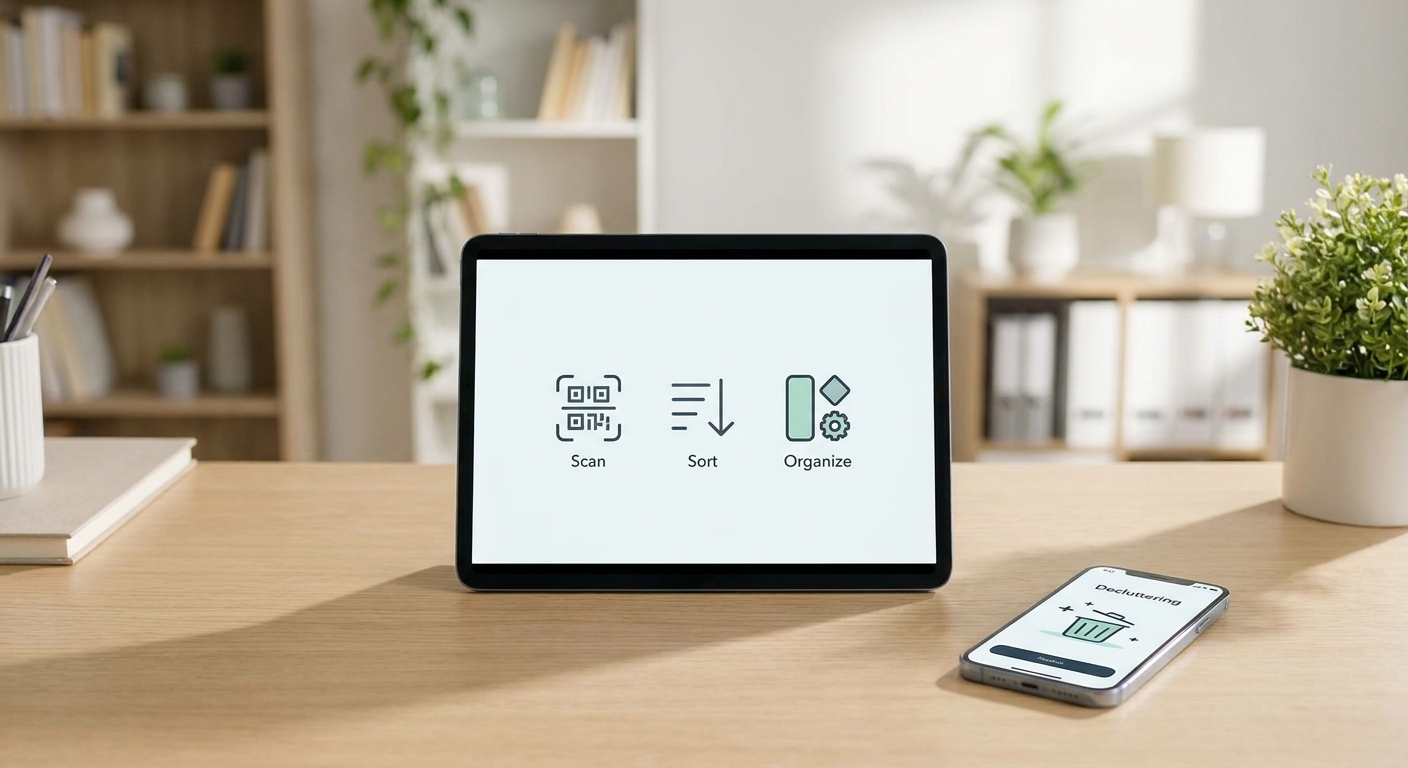
A cluttered bedroom with scattered clothes, boxes, and items on the floor shown next to a smartphone displaying an app screen with an organization plan overlay, in a bright modern home setting
Smartphone running one of the best AI decluttering apps to scan a cluttered bedroom and generate an organization plan
[“AI decluttering apps”, “home organization”, “AI apps 2026”, “smart home tools”, “productivity apps”]