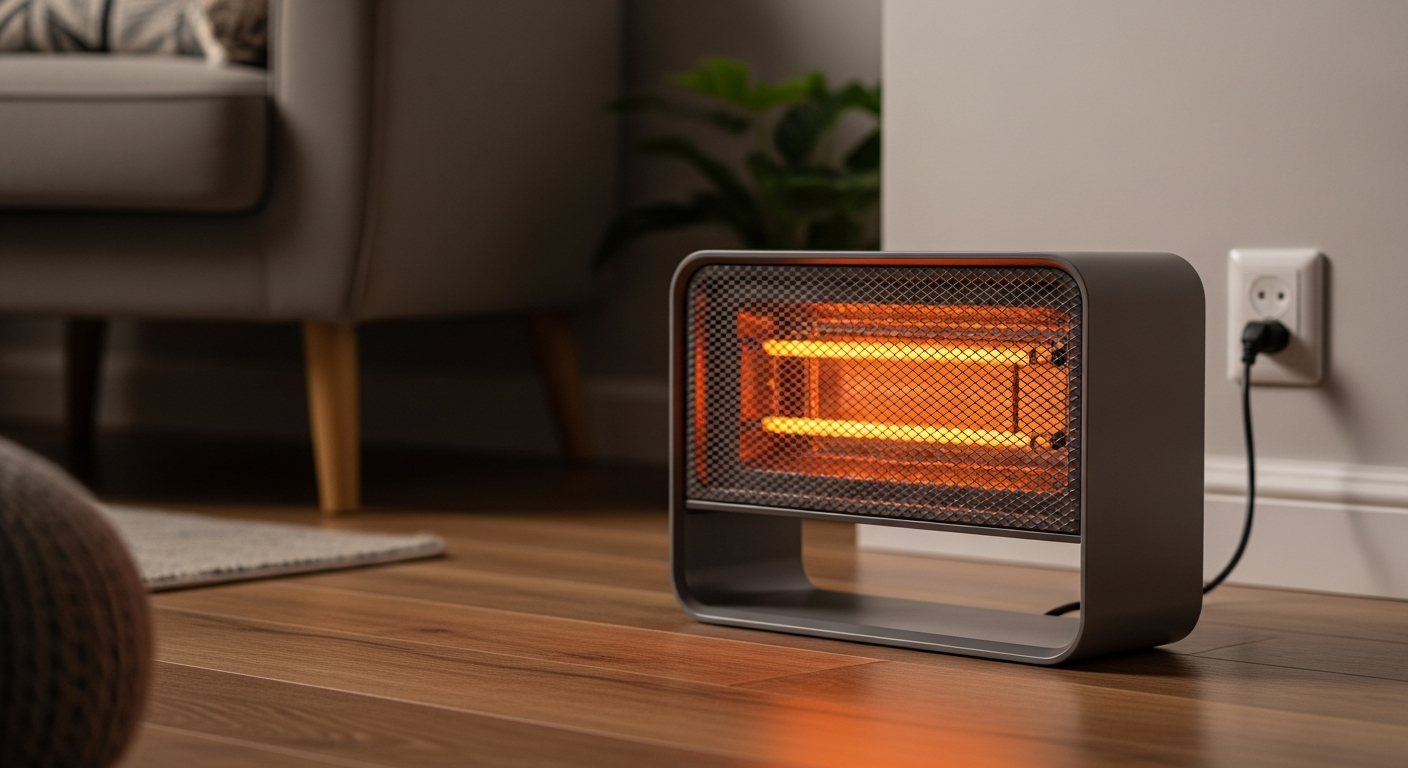
Space heater wattage usage typically ranges from 750 to 1,500 watts, with most full-size units running near the 1,500-watt maximum allowed on a standard household circuit. Understanding your space heater wattage usage matters because it directly affects both your comfort and your monthly electric bill.
Before you buy a space heater, it helps to know how space heater wattage usage translates into heat output, room coverage, and real-world cost. This guide breaks it down in plain language so you can shop with confidence.
What Wattage Actually Means for a Space Heater
Wattage is a measure of how much electrical power a device draws while running. For space heaters, higher wattage generally means more heat output, but it also means higher space heater wattage usage and energy consumption overall.
Most electric space heaters sold in the U.S. are capped at 1,500 watts. That’s because standard household outlets and circuits are rated for 15 or 20 amps, and 1,500 watts is close to the safe limit for a 15-amp circuit at 120 volts.
Smaller or portable models often run at 750 or 1,000 watts on a low setting, then jump to 1,500 watts on high. Knowing this range is the foundation of understanding space heater wattage usage before you make a purchase.
How to Calculate Space Heater Electricity Costs
Once you know the wattage, calculating your space heater wattage usage in terms of cost is straightforward. The formula is simple and only requires three numbers.
- Convert watts to kilowatts by dividing by 1,000 (1,500 watts = 1.5 kW).
- Multiply kilowatts by hours used per day.
- Multiply that result by your electricity rate per kilowatt-hour (check your utility bill for this figure).
For example, a 1,500-watt heater running 5 hours a day uses 7.5 kWh daily. Multiply that by your local rate, and you get a clear daily cost estimate based on your actual space heater wattage usage. Multiply the daily figure by 30 for a monthly projection.
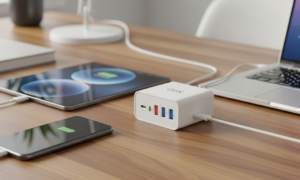
This same math applies to almost any plug-in appliance. If you’re also curious about how wattage affects charging speed for devices, our USB-C charger wattage guide walks through a similar calculation for smaller electronics.
Choosing the Right Wattage for Your Room Size
Picking the correct wattage isn’t just about saving money. An undersized heater struggles to warm a room, while an oversized one wastes energy and cycles on and off constantly, driving up space heater wattage usage unnecessarily.
A common industry rule of thumb suggests roughly 10 watts per square foot for average ceiling heights and typical insulation. This is a starting point, not an exact science, since insulation quality, ceiling height, and climate all play a role in real-world space heater wattage usage.
- Small room (100-150 sq ft): 1,000-1,500 watts is usually sufficient.
- Medium room (150-250 sq ft): Look for 1,500 watts, often the max for a single unit.
- Larger or open-concept spaces: Consider two smaller heaters instead of one large unit to distribute heat evenly.
Rooms with poor insulation, high ceilings, or drafty windows may need more wattage than the square footage suggests. If you’re heating a garage, basement, or older home, factor in extra buffer capacity.
Factors That Affect Real-World Space Heater Wattage Usage
The wattage printed on the box is a maximum rating, not necessarily what the heater draws every minute it’s on. Several factors change actual space heater wattage usage throughout the day.
Thermostats and cycling matter most. Many space heaters include a thermostat that cuts power once the room reaches the set temperature, then kicks back on as it cools. This means average space heater wattage usage is often lower than the rated wattage over a full day.
Heat settings also matter. Most units offer low, medium, and high modes, each drawing different wattage. Running on low for most of the day, and reserving high for quick warm-ups, reduces total space heater wattage usage noticeably.
Finally, heater type plays a role. Ceramic heaters often cycle efficiently for smaller spaces, while radiant or oil-filled heaters may run longer but at steadier wattage. Neither is inherently better; the right choice depends on your room and habits.
Tips to Reduce Space Heater Running Costs
Small habits can meaningfully lower your electricity bill without sacrificing warmth by keeping your space heater wattage usage in check. Try these practical adjustments:
- Use a heater with a built-in thermostat to avoid constant full-power operation.
- Close doors and vents to heat only the room you’re occupying.
- Set a timer so the heater shuts off automatically overnight or when you leave.
- Choose a wattage matched to your room size instead of oversizing “just in case.”
- Pair the heater with better insulation, like draft stoppers or heavy curtains, to reduce heat loss.
These steps don’t change the heater’s rated wattage, but they reduce how long it needs to run, which is what actually drives your bill and your overall space heater wattage usage.
Space Heaters and Your Home’s Overall Electrical Load
Space heaters draw a lot of power compared to most household electronics, so it’s worth thinking about your circuit’s total load alongside your space heater wattage usage. Running a 1,500-watt heater alongside other high-draw devices on the same circuit can trip a breaker.
This is a different concern than what you’d have with low-power devices like routers or laptops. If you’re troubleshooting other home electronics issues, guides like our mesh WiFi vs extender comparison or laptop battery draining fast fixes cover unrelated but equally practical electricity-use questions many households face.
As a general safety practice, avoid plugging a space heater into a power strip or running it on the same circuit as other major appliances. Plug it directly into a wall outlet whenever possible.
Frequently Asked Questions
How many watts does a space heater use per hour?
Most space heaters use between 750 and 1,500 watts per hour, depending on the setting. A 1,500-watt heater running for one full hour on high uses 1.5 kWh of electricity, which you can multiply by your utility rate for cost.
Is a 1,500-watt space heater expensive to run?
It depends on your electricity rate and how many hours it runs daily. Using the standard formula for space heater wattage usage, a 1,500-watt unit running several hours a day adds a noticeable but generally manageable amount to a monthly bill.
Does a lower wattage space heater save money?
Yes, generally. Lower wattage means less power drawn per hour, so overall space heater wattage usage drops, but it may also mean slower heating or less coverage. The best savings come from matching wattage to your room size rather than choosing the lowest number available.
Understanding space heater wattage usage before you buy helps you avoid an undersized unit that won’t warm your room or an oversized one that inflates your electric bill. Match the wattage to your space, use a thermostat-equipped model, and calculate expected costs using your actual utility rate. A little math upfront leads to a warmer room and a more predictable bill all winter long.