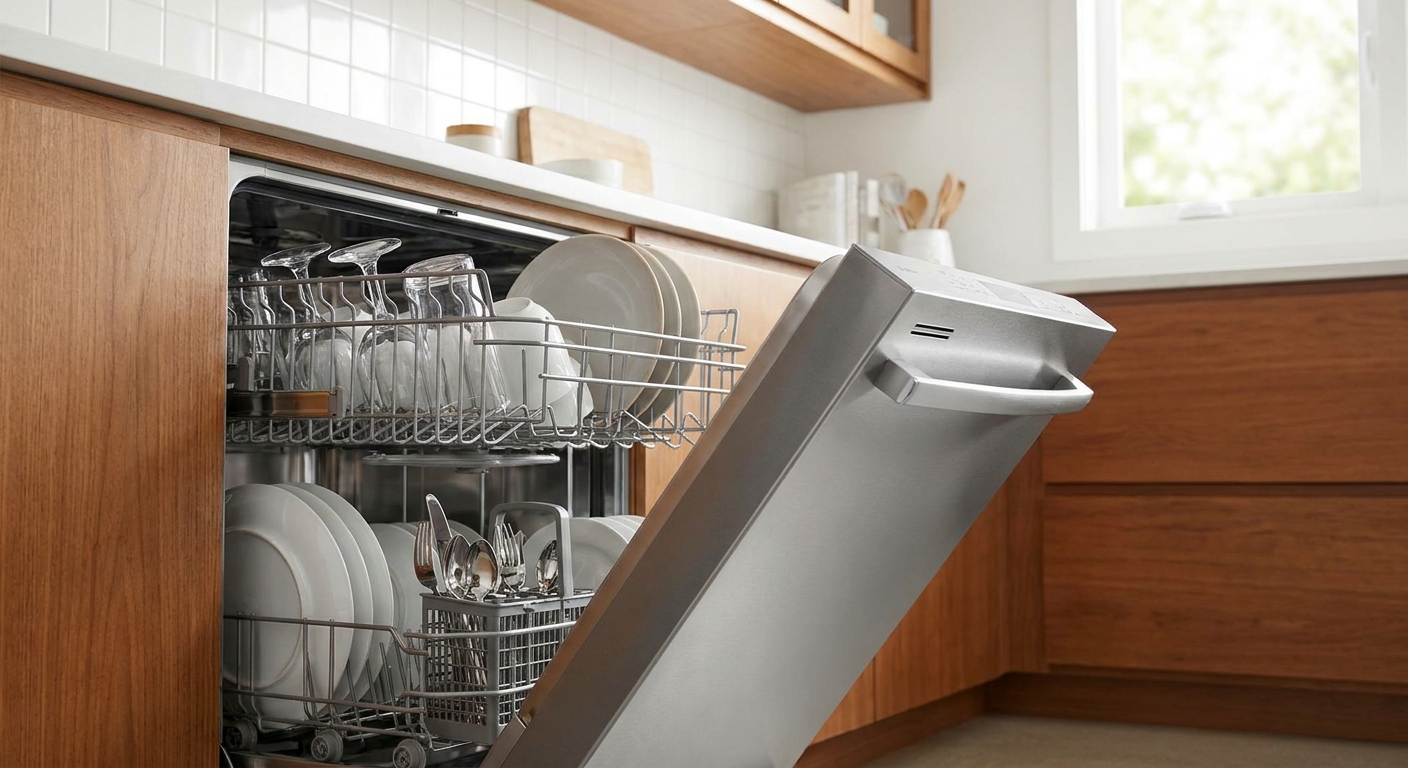
The cost to run dishwasher appliances daily typically ranges from about 15 to 60 cents per cycle, depending on your machine’s age, settings, and local utility rates. Over a month, that usually adds up to somewhere between $5 and $20. Let’s break down where that money actually goes.
Many shoppers assume dishwashers are expensive to operate. In reality, modern machines are often cheaper than hand washing once you factor in hot water usage. Understanding the real numbers helps you budget accurately and decide whether an upgrade makes sense.
What Determines the Cost to Run Dishwasher Cycles?
Three main factors drive your dishwasher expenses. These are electricity rates, water heating costs, and cycle length. Your specific usage habits also play a big role.
- Energy efficiency rating: Energy Star models typically use less electricity and water per cycle than older units.
- Water heating method: Dishwashers that heat their own water internally often cost more than those relying on your home’s existing hot water line.
- Cycle type: Heavy or sanitize cycles run longer and use more hot water than quick or eco settings.
- Local utility rates: Electricity and water prices vary significantly by region, which changes your final bill.
Breaking Down Costs by Dishwasher Type
Not all dishwashers consume energy the same way. Here’s a general look at how different types compare.
Standard Built-In Dishwashers
Most full-size built-in dishwashers use roughly 1 to 1.5 kilowatt-hours per cycle. At average national electricity rates, that translates to roughly 15 to 25 cents in electricity alone. Add water and detergent costs, and a single cycle often lands between 25 and 45 cents.
Compact and Portable Dishwashers
Smaller units designed for apartments or tight kitchens typically use less water and energy per load. They can be a smart option for households also considering space-saving laundry setups, similar to the logic behind choosing from the best compact washer dryer combos for small spaces.
Energy Star Certified Models
Energy Star dishwashers are built to use notably less water and electricity than standard models. While upfront costs may be higher, the long-term savings on your monthly utility bill can offset that difference within a few years.
Average Monthly Cost to Run Dishwasher Appliances
If you run your dishwasher once daily, expect a monthly cost somewhere between $7.50 and $18, depending on your machine and rates. Running it every other day roughly cuts that estimate in half.
Households that only run full loads tend to save the most. Partial loads waste water and electricity without cleaning more dishes. Using the eco or energy-saving setting, when available, can also meaningfully lower your monthly total.
How Dishwasher Costs Compare to Hand Washing
It’s a common myth that hand washing is automatically cheaper. In practice, running a tap for hand washing often uses more hot water than an efficient dishwasher cycle. For a detailed side-by-side comparison, see our breakdown on dishwasher vs hand washing water usage.
If you’re trying to lower your overall kitchen appliance footprint, it helps to look at the full picture. That includes your refrigerator’s power draw, which you can check in our guide to how many amps a refrigerator uses.
Tips to Lower Your Dishwasher’s Operating Cost
Small habit changes can meaningfully reduce your monthly dishwasher expense. Try these simple adjustments.
- Run only full loads to maximize efficiency per cycle.
- Use the eco or energy-saving setting whenever possible.
- Skip pre-rinsing dishes under hot tap water before loading.
- Let dishes air-dry instead of using the heated dry cycle.
- Run cycles during off-peak electricity hours if your utility offers lower rates.
These changes are easy to implement and don’t require any new equipment. Over a year, they can add up to meaningful savings on your utility bill.
When Rising Costs Signal a Bigger Problem
If your dishwasher’s energy use suddenly spikes, it may be a sign of an aging or malfunctioning unit. Heating elements that stay on longer than normal, or motors working harder than usual, both increase your electricity draw. This is similar to how other kitchen appliances show warning signs before failure, such as those covered in our guide on microwave sparking causes and safe fixes.
Kitchen appliances don’t last forever, and dishwashers are no exception. If yours is approaching the 10-year mark and costs keep climbing, it may be time to compare repair costs against replacement. The same logic applies when evaluating other major appliances, like understanding how long refrigerators last and when to replace them.
Frequently Asked Questions
What is the average cost to run dishwasher units for a year?
Running a dishwasher daily typically costs between $90 and $220 per year, depending on your machine’s efficiency, cycle choice, and local utility rates. Energy Star models generally fall toward the lower end of that range.
Does running a dishwasher every night increase my electricity bill significantly?
Daily use adds up, but a single cycle usually costs only 15 to 45 cents. Compared to other major appliances, dishwashers are rarely the biggest driver of a high electricity bill.
Is it cheaper to run a dishwasher at night?
If your utility offers time-of-use pricing, running your dishwasher during off-peak hours can lower your electricity cost per cycle. Check your utility’s rate schedule to confirm whether this applies to your area.
Understanding the true cost to run dishwasher appliances helps you make smarter decisions, whether you’re budgeting monthly expenses or deciding on a new purchase. Small habit changes, paired with an efficient machine, can keep your kitchen running smoothly without straining your utility bill.