The best noise-cancelling headphones for flights do more than block sound—they need to survive a 14-hour haul, stay comfortable while you sleep, and still have battery life left when you land. Generic ANC comparisons often miss this. A pair that silences a quiet office might struggle against the low, droning rumble of a jet engine at 35,000 feet.
This guide focuses on what actually matters on a plane: cabin noise reduction, real-world battery endurance, and comfort over many hours. We skip the lab-spec hype and focus on how these headphones perform when you’re crammed into seat 32B.
Choosing Noise-Cancelling Headphones for Flights: Why Cabin Noise Is a Different Challenge
Airplane cabins produce a steady, low-frequency hum. This is different from chatter in a coffee shop or office hum. Good ANC for flights targets this specific frequency range.
Some headphones excel at cutting voices but let engine drone pass through. Others handle the rumble beautifully but add a faint hiss of their own. When shopping for noise-cancelling headphones for flights, prioritize models tested specifically in cabin-like environments, not just quiet rooms.
Battery Life for Long-Haul Flights
A transpacific or transatlantic flight can run 12 to 16 hours. Add airport time before and after, and your headphones need serious staying power.
Look for these battery-related features when comparing options:
- At least 20-30 hours of ANC-on playback per charge
- Fast-charge capability that adds several hours of use from a short top-up
- A wired fallback mode so dead batteries don’t end your flight in silence
- USB-C charging compatible with the best portable chargers for travel you’re already packing
If you’ve ever had a wearable die mid-trip, the frustration is familiar. The same battery-management lessons in our guide to a smartwatch battery dying fast apply here too—avoid extreme heat in overhead bins and keep firmware updated.
Comfort for Sleeping on Planes
Comfort separates great travel headphones from merely good ones. Over-ear cushions should distribute pressure evenly, especially if you plan to lean your head against a window or seat.
Consider these comfort factors before buying:
- Clamping force—too tight causes headaches after a few hours
- Earcup depth—enough room so ears don’t press directly against drivers
- Weight—lighter headbands reduce neck strain on long flights
- Memory foam or protein leather padding that doesn’t trap heat
Side sleepers often prefer slimmer, lower-profile headphones. If you tend to doze off reading instead, our comparison of an e-reader vs tablet for reading can help you pick the right in-flight companion device too.
Wireless Reliability at Altitude
Bluetooth performance can behave oddly in metal cabins packed with electronics. Dropouts and stutters are more common at altitude than on the ground.
If you’ve dealt with connection issues before, you know the frustration. Many of the same troubleshooting steps in our article on Bluetooth earbuds keep disconnecting apply to over-ear headphones as well—resetting pairing profiles, updating firmware, and avoiding interference from other devices.
When buying noise-cancelling headphones for flights, check for multipoint Bluetooth support. This lets you pair with both your phone and the seatback entertainment system without constant re-pairing.
Top Features to Compare Side-by-Side
Instead of chasing marketing buzzwords, focus on measurable, traveler-relevant specs. Here’s a practical checklist:
- ANC performance in low-frequency range (engine drone, not just voices)
- Battery life rated with ANC active, not just Bluetooth playback
- Weight under 250-300 grams for extended comfort
- Foldable design for easy storage in a carry-on or seat pocket
- Wired audio jack for compatibility with in-flight entertainment systems
- App-based EQ customization to fine-tune sound for white noise or music
A headphone that checks most of these boxes will usually outperform one with flashy specs but poor real-world fit.
Packing and Travel Tech Tips
Headphones are only part of your travel tech kit. A dead laptop or overheating device can ruin downtime between flights, so it helps to be proactive.
If your laptop struggles during long work sessions at the gate, check our fixes for laptop overheating before your next trip. And if you’re using a webcam for video calls between connections, our guide on a webcam that keeps freezing on calls can save you from awkward airport lounge meetings.
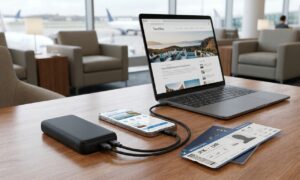
Packing a lightweight charging bank alongside your headphones ensures you’re never caught with a dead battery mid-flight.
Final Verdict
The best noise-cancelling headphones for flights balance three things: strong low-frequency ANC, battery life that lasts well beyond your flight time, and comfort that holds up when you’re trying to sleep upright. Skip models that only look good on a spec sheet—prioritize real cabin testing and all-day wearability instead.
Before your next long-haul trip, double-check battery life ratings, try the headphones on with glasses if you wear them, and confirm wired fallback options are available. A little research now means a much quieter, more comfortable flight later.
Frequently Asked Questions
What makes noise-cancelling headphones for flights different from regular ANC headphones?
The best noise-cancelling headphones for flights target low-frequency engine drone, offer long battery life, and stay comfortable during extended wear, including sleep.
How long should headphone battery life be for long-haul flights?
Aim for at least 20-30 hours of ANC-on playback so you have power for the flight, layovers, and your return trip without needing a recharge.
Are over-ear or in-ear headphones better for sleeping on planes?
Over-ear headphones with soft, low-clamping-force padding are generally more comfortable for side sleeping and long wear than in-ear buds, which can cause pressure discomfort.
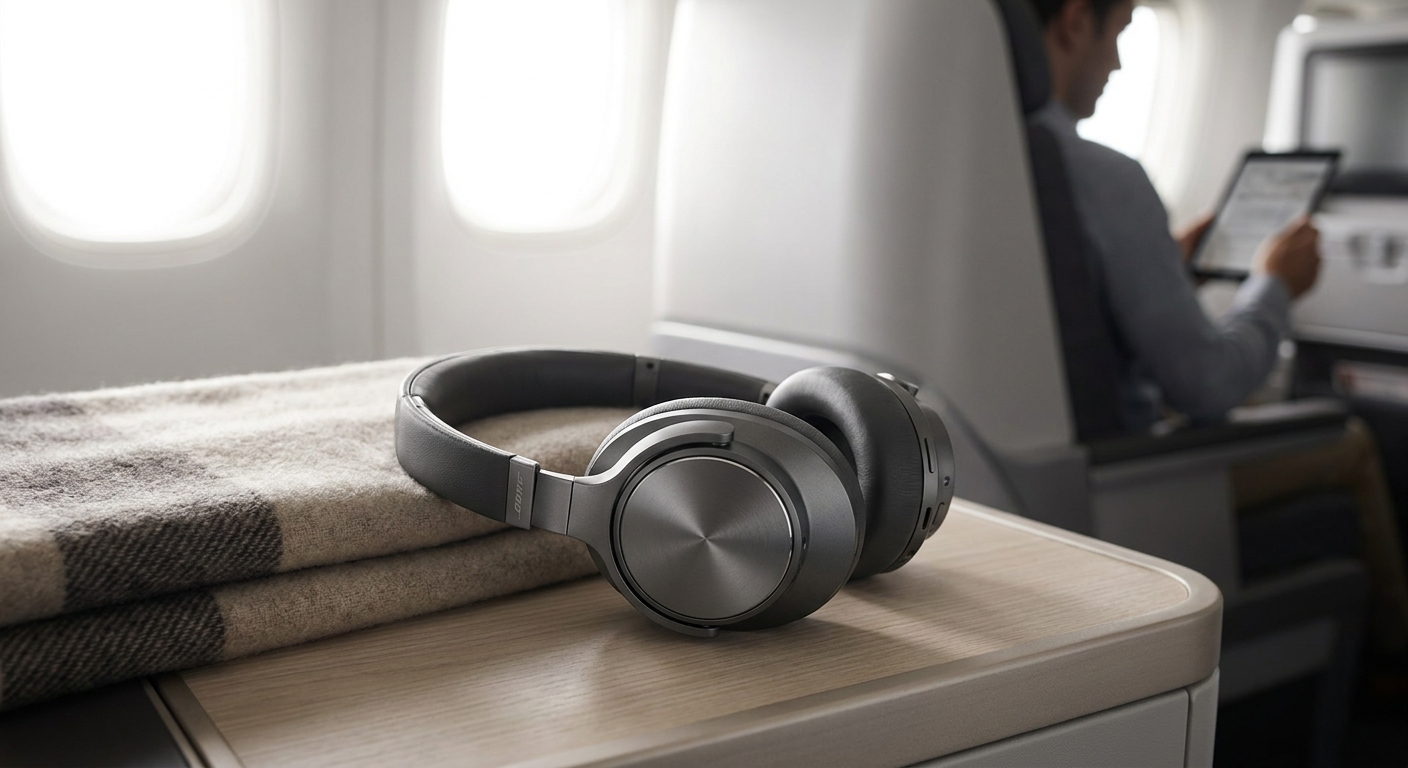
A pair of over-ear wireless noise-cancelling headphones resting on a tray table beside an airplane window seat, with a blurred view of clouds outside