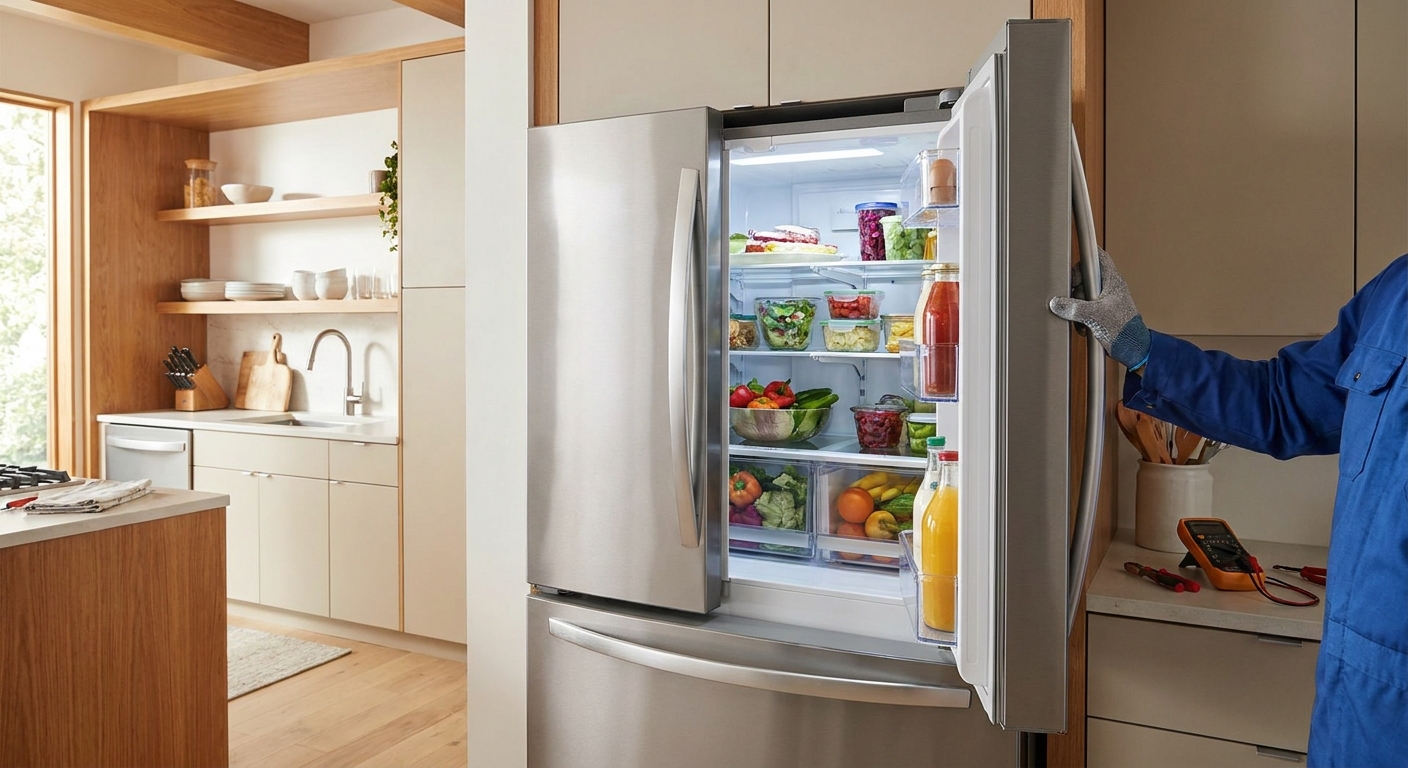
How long do refrigerators last? On average, a refrigerator lasts between 10 and 20 years, depending on the type, brand, and how well it’s maintained. That’s a wide range, so the real answer to how long do refrigerators last depends on a few key factors we’ll break down below.
Buying a new fridge is a big expense, and nobody wants to replace one before its time. But waiting too long can mean spoiled food, higher energy bills, and a sudden breakdown at the worst possible moment. This guide covers how long do refrigerators last by type and brand, plus a clear checklist to help you decide whether to repair or replace.
Average Refrigerator Lifespan by Type
Not all refrigerators are built the same way, and their designs affect how long they hold up. Here’s a general breakdown of expected lifespans by style, which helps answer how long do refrigerators last in different households.
- Top-freezer refrigerators: These simple, time-tested designs often last 15 to 20 years thanks to fewer moving parts.
- Side-by-side refrigerators: Typically last 12 to 15 years, with wear showing sooner in the ice maker and dispenser.
- French door refrigerators: Usually last 10 to 15 years. Multiple doors and drawers add convenience but also more components that can fail.
- Built-in and counter-depth models: These premium units can last 15 to 20 years if serviced regularly, though repairs tend to cost more.
- Mini fridges and compact units: These generally last 8 to 12 years due to lighter-duty compressors.
Simpler designs tend to outlast feature-heavy models. If longevity is your top priority when considering how long do refrigerators last, a basic top-freezer is often the safest bet.
Does Brand Affect How Long Refrigerators Last?
Brand reputation matters, but it’s not the only factor in how long do refrigerators last. Build quality, part availability, and how consistently a line is manufactured all play a role.
Established brands with a long track record in refrigeration often earn trust because replacement parts stay available for years. Newer or budget brands can perform well too, but repairs may take longer if parts are harder to source.
Rather than chasing a specific brand name, focus on models with solid warranties, straightforward repair histories, and positive long-term owner reviews. A well-maintained mid-range fridge often outlasts a neglected premium one, no matter what the spec sheet says about how long do refrigerators last.
Factors That Shorten or Extend Lifespan
Several everyday habits and conditions influence how long your refrigerator actually lasts, and they matter more than the brand name on the door.
- Location and ventilation: A fridge crammed against a wall with no airflow around the coils works harder and wears out faster.
- Temperature settings: Running the unit colder than necessary strains the compressor over time.
- Door seal condition: Worn gaskets let cold air escape, forcing the system to run constantly.
- Power supply: Voltage fluctuations can stress electrical components. If you’re curious about your unit’s power draw, check out this guide on how many amps a refrigerator uses.
- Maintenance habits: Regular coil cleaning and prompt repairs extend lifespan significantly.
Small maintenance steps, like vacuuming dusty coils twice a year, can add real years to your appliance’s life and shift the answer to how long do refrigerators last in your favor.
Signs You Should Repair, Not Replace
Not every issue means it’s time to shop for a new fridge. Some problems are minor and inexpensive to fix, and addressing them promptly is part of what determines how long do refrigerators last in the first place.
Consider repair if your refrigerator is under 8 years old and shows one of these issues:
- A single faulty part, like a thermostat, fan, or door seal
- Minor temperature inconsistency that a technician can recalibrate
- Unusual but isolated noises, such as a one-time rattle
- An ice maker or dispenser issue unrelated to the cooling system
In these cases, a repair bill under a few hundred dollars is usually worth it, especially if the fridge is still within its expected lifespan.
Signs You Should Replace Your Refrigerator
Some warning signs point clearly toward replacement, especially as a unit approaches or passes the 10-year mark that often defines how long do refrigerators last before major problems start.
- The compressor has failed. This is the heart of the fridge, and replacing it often costs nearly as much as a new unit.
- Food spoils frequently, even after adjusting the thermostat and checking the seals.
- Condensation builds up constantly inside or on the exterior, signaling a seal or insulation failure.
- Energy bills keep climbing without any other explanation, meaning the unit is losing efficiency.
- Repair costs exceed 50% of a new fridge’s price. At that point, replacement almost always makes more financial sense.
- The fridge is louder than it used to be, with grinding, buzzing, or vibrating noises that persist after service.
If you notice two or more of these signs together, it’s a strong signal that replacement is the smarter long-term choice, regardless of how long do refrigerators last on paper.
Other Kitchen Appliances Worth Checking
Refrigerators rarely fail in isolation. If your kitchen has had several appliance issues lately, it might be worth a broader check.
For example, a sparking microwave or a humming garbage disposal that won’t run can sometimes point to shared electrical issues in an older kitchen. If you’re planning upgrades beyond the fridge, our comparisons on dishwasher versus hand washing water use and stackable versus side-by-side washer dryers can help you plan a full kitchen or laundry refresh.
Frequently Asked Questions
How long do refrigerators last on average?
Most refrigerators last between 10 and 20 years. Simpler top-freezer models tend to last longest, while feature-rich French door units often need replacement closer to the 10- to 15-year mark.
How long do refrigerators last with regular maintenance?
With regular coil cleaning, proper airflow, and prompt small repairs, many refrigerators reach the higher end of their expected range, often 15 to 20 years for simpler models.
Can I extend my refrigerator’s lifespan?
Yes. Clean the condenser coils twice a year, keep the door seals clean and intact, avoid overloading shelves, and give the unit enough space for airflow. These habits reduce strain on the compressor.
Is it cheaper to repair or replace an old refrigerator?
It depends on the age and the cost of the repair. As a rule of thumb, if the repair costs more than half the price of a new comparable model, replacement is usually the better value.
Knowing how long do refrigerators last helps you plan ahead instead of scrambling after a breakdown. Watch for the warning signs above, keep up with simple maintenance, and you’ll get the most value out of whichever fridge you choose.