Microwave sparking inside is alarming, but it’s usually caused by something fixable: metal touching the cavity walls, leftover food debris, or a worn waveguide cover. This guide walks you through the most common culprits, a simple safety checklist, and when it’s time to stop troubleshooting and replace the unit.
Seeing sparks or flashes of light inside your microwave can feel like a fire hazard waiting to happen. In many cases, though, the fix takes just a few minutes. Let’s break down why this happens and what to do about it.
Why Is My Microwave Sparking Inside?
Microwaves generate sparks when electromagnetic energy hits a conductive or uneven surface instead of being absorbed by food. This creates small electrical arcs, similar to tiny lightning bolts, inside the cavity.
The spark itself isn’t always dangerous. But the cause behind it can damage your appliance over time or even start a fire if ignored. Identifying the root cause quickly keeps you and your kitchen safe.
Common Causes of Microwave Sparking Inside
Most sparking issues fall into a handful of categories. Here are the usual suspects:
- Metal objects or trim: Twist ties, aluminum foil, or gold-rimmed plates reflect microwaves and cause arcing.
- Food debris buildup: Splattered grease or food particles stuck to the cavity walls can overheat and spark.
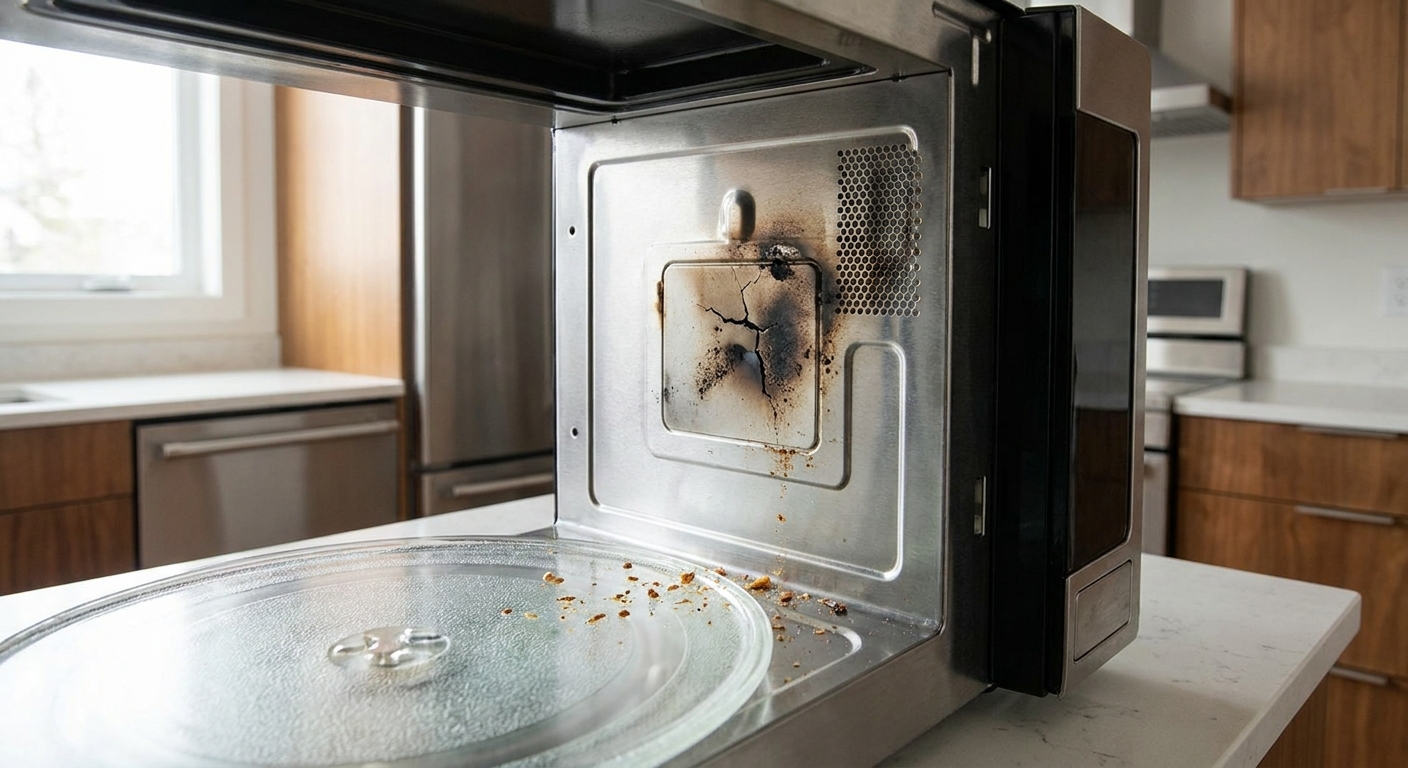
- Worn waveguide cover: This thin panel protects the magnetron. Once it’s burned or chipped, sparks often appear near that spot.
- Damaged mica plate: Similar to the waveguide cover, this protective layer can wear down from repeated use.
- Faulty magnetron: In rarer cases, the component that generates microwaves itself is failing.
- Scratched or chipped interior paint: Exposed metal beneath a chipped interior coating can create arcing points.
How to Diagnose the Problem Safely
Before touching anything, unplug the microwave. This removes any risk of electric shock while you inspect the interior.
Next, look for obvious signs like scorch marks, a cracked waveguide cover, or food residue near the sparking area. Often, the location of the spark points directly to the cause.
Step-by-Step Diagnostic Checklist
- Unplug the microwave and let it cool completely.
- Remove the turntable and inspect for food debris or grease spots.
- Check the waveguide cover (usually on the side or top wall) for burn marks or holes.
- Look at any metal trim, racks, or decorative plates you may have used inside.
- Inspect the interior paint for chips or exposed metal.
- Note exactly where the sparking occurred for easier troubleshooting.
Safe DIY Fixes You Can Try
Many sparking problems have simple, low-cost solutions. Here’s what usually works:
- Clean the cavity thoroughly: Use a damp cloth and mild soap to remove grease and food buildup. Avoid abrasive scrubbers that scratch the interior.
- Replace the waveguide cover: These are inexpensive and widely available for most brands. Swapping it out takes just a few minutes with a screwdriver.
- Remove all metal items: Never microwave foil, metal twist ties, or dishes with metallic trim.
- Avoid running it empty: An empty microwave has nothing to absorb the energy, which increases arcing risk.
If sparking stops after cleaning or replacing the waveguide cover, your microwave is likely safe to use again. Always test it briefly with a cup of water before resuming normal use.
When to Call a Technician or Replace the Unit
Some causes of microwave sparking inside require professional repair or a full replacement. Don’t attempt to open the microwave’s outer casing yourself—it can hold a charge even when unplugged.
Consider replacing the unit if:
- Sparking continues after cleaning and replacing the waveguide cover.
- You notice a burning smell or smoke during use.
- The interior paint is extensively chipped, exposing large areas of metal.
- The microwave is more than eight to ten years old and repairs would cost nearly as much as a new unit.
A faulty magnetron or capacitor issue typically isn’t worth repairing on older, budget-model microwaves. In those cases, replacement is the safer and more economical choice.
Preventing Future Sparking Issues
A little routine maintenance goes a long way toward avoiding this problem altogether. Wipe down the interior after every few uses, and never place metal or foil inside. Also, check your dishware for hidden metallic paint before microwaving.
Keeping your microwave clean also pairs well with maintaining other kitchen appliances. For instance, if you’re troubleshooting other mysterious noises in the kitchen, our guide on garbage disposal humming not working covers a similar diagnostic approach. And if you’re curious how your microwave’s energy use compares to other appliances, check out our breakdown on how many amps a refrigerator uses for a broader look at kitchen electrical demands.
If you’re weighing whether to repair or replace any major appliance, our guide on appliance not draining water offers a similar decision-making framework that applies well beyond dishwashers and washing machines.
Frequently Asked Questions
Is it safe to use a microwave that sparked once?
If the sparking was caused by a one-time issue like foil or a stray metal twist tie, cleaning the cavity and removing the object usually resolves it. Run a short test cycle with water before trusting it fully again.
Can a sparking microwave start a fire?
Yes, prolonged sparking near flammable debris or a damaged waveguide cover can pose a fire risk. Unplug the unit immediately if you notice repeated arcing, smoke, or a burning smell.
How much does it cost to fix a sparking microwave?
A replacement waveguide cover typically costs very little and is an easy DIY fix. However, if the magnetron or capacitor is damaged, repair costs can approach the price of a new microwave, making replacement the more practical option.
Microwave sparking inside is unsettling, but most causes are simple to identify and fix. Start with a thorough cleaning, inspect the waveguide cover, and remove any metal items from the cavity. If sparking persists after these steps, it’s time to consult a technician or consider a replacement unit for peace of mind.