The best portable air conditioners for apartments combine proper BTU sizing, a workable venting setup, and quiet operation so renters without central AC can stay cool without annoying neighbors or landlords. If you’ve ever shopped for one of these units, you know the listings can be confusing. This guide cuts through the noise, literally and figuratively, to help you choose a unit that actually works in a rental.
Apartment living comes with unique constraints. You may not have access to an exterior window, you might share walls with neighbors, and your lease probably forbids permanent modifications. A portable AC unit has to work around all of that, which is exactly why finding the best portable air conditioners for your specific layout matters more than chasing the highest BTU number on the shelf.
Why Apartment Cooling Is Different
Unlike homeowners, renters often can’t install a window unit or run ductwork. Many apartment windows are sliders, casements, or simply inaccessible due to balconies or HOA rules.
That’s where portable air conditioners shine. They sit on the floor, vent through a flexible hose, and require no permanent installation. But not all portable units are created equal, and picking the wrong one means wasted money and a warm living room.
What Makes the Best Portable Air Conditioners for Small Spaces
BTU, or British Thermal Units, measures cooling capacity. Buying based on BTU alone without considering room size is the most common mistake apartment dwellers make when trying to identify the best portable air conditioners for their layout.
As a general guide:
- Studio or small bedroom (up to 300 sq ft): 8,000–10,000 BTU
- One-bedroom living room (300–450 sq ft): 10,000–12,000 BTU
- Open-concept apartment (450–600 sq ft): 12,000–14,000 BTU
- Larger or sun-facing units: 14,000+ BTU
Keep in mind that portable AC units typically list two BTU numbers: ASHRAE and the older DOE rating. The DOE number is usually lower and more realistic for real-world performance. When comparing specs, use the DOE rating to avoid overestimating cooling power.
Oversizing seems like a safe bet, but it isn’t. A unit that’s too powerful cools the air quickly without removing enough humidity, leaving the room feeling clammy. Undersizing means the compressor runs constantly, driving up your electric bill and shortening the unit’s lifespan. This is why the best portable air conditioners are matched to your actual square footage rather than picked for maximum power.
Solving the Venting Problem Without an Exterior Window
This is where most apartment renters get stuck. Portable ACs need to exhaust hot air somewhere, and that usually means a window kit.
If you don’t have a standard window, consider these options:
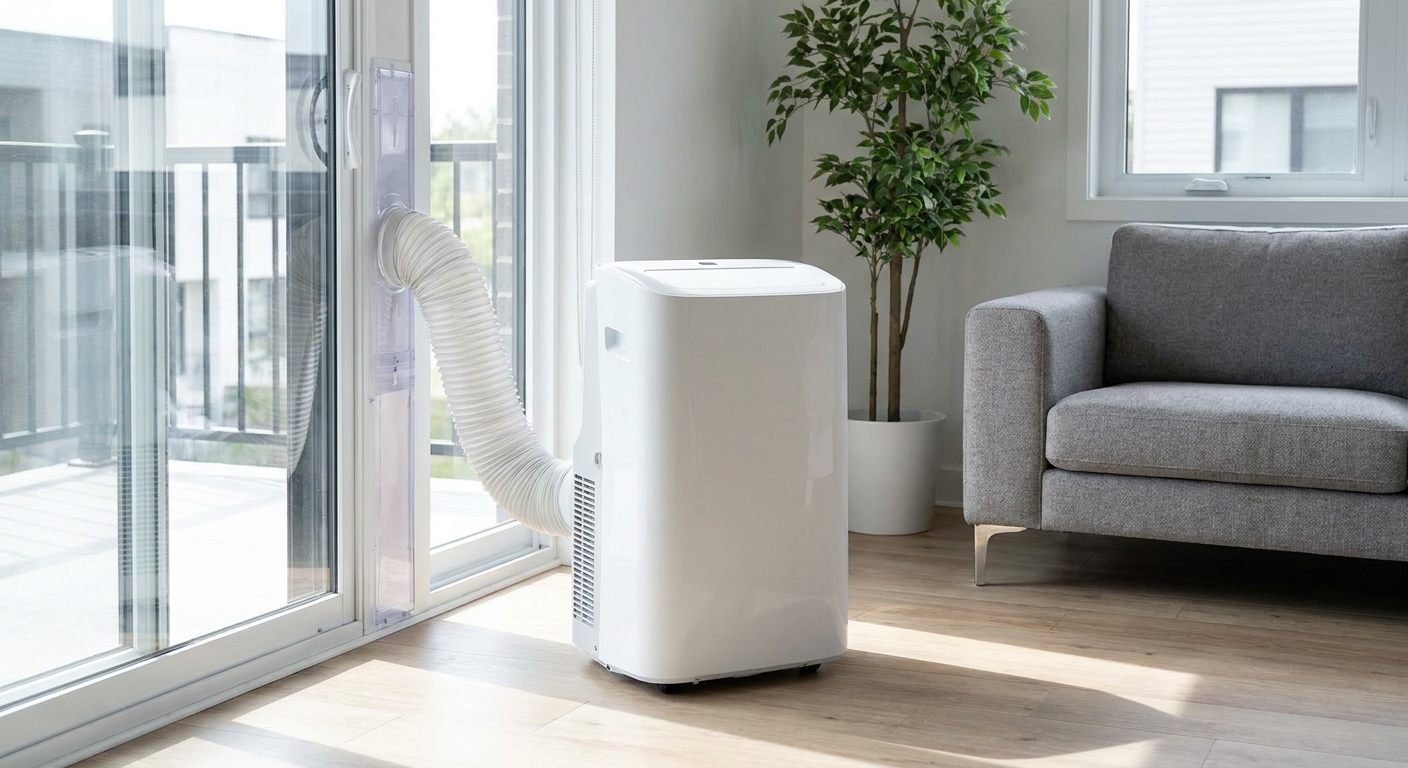
- Sliding door vent kits: Many manufacturers sell kits designed for sliding glass doors instead of double-hung windows.
- Drop-ceiling venting: If you have access to a drop ceiling, some installers route the hose upward and through ductwork, though this usually requires landlord approval.
- Dual-hose units: These pull in outside air for cooling rather than recirculating room air, which improves efficiency even with imperfect venting.
- Casement window adapters: Flexible acrylic panels can fit awkward casement or crank-style windows that standard kits don’t support.
Always check your lease before drilling or permanently altering a window frame. Most portable AC kits are designed to be removable, which keeps you in good standing with your landlord.
Noise Levels Matter More in Apartments
Thin apartment walls and open floor plans mean sound travels. A portable AC humming at 50 decibels in a house might go unnoticed, but in a studio apartment, it’s right next to your bed or desk.
Look for units advertising noise levels between 42 and 52 decibels for bedrooms, and don’t assume the same unit will be comfortable in every room. Dual-hose models and compressors with rubber vibration dampeners tend to run quieter than single-hose units of similar BTU capacity, another reason they often top lists of the best portable air conditioners for apartment bedrooms.
If you work from home or sleep during the day, prioritize a model with a dedicated “sleep” or “quiet” mode, even if it slightly reduces cooling output during that setting.
Other Features to Compare When Choosing the Best Portable Air Conditioners
Beyond BTUs and noise, a few extra features make daily use easier:
- Built-in dehumidifier mode: Useful for humid climates without running full cooling.
- Programmable timers: Helps manage energy costs, similar to how tracking daily dishwasher electricity and water costs can reveal where your utility bill is going.
- Caster wheels: Essential for moving the unit between rooms in a small apartment.
- Washable filters: Reduces long-term maintenance costs and improves air quality.
- Wi-Fi connectivity: Lets you adjust settings remotely, handy if you’re out and want the apartment cool before you arrive.
Energy efficiency also matters for renters paying their own utilities. If you’re already comparing appliance efficiency, it’s worth reading about energy-efficient refrigerators to understand how efficiency ratings translate into real savings across different appliance categories.
Placement Tips for Small Apartments
Where you put your portable AC affects performance as much as the unit itself. Keep these tips in mind:
- Position the unit within 5 to 15 feet of a window or sliding door to keep the exhaust hose short and straight.
- Avoid placing it behind furniture or curtains that block airflow.
- Keep at least a foot of clearance on all sides for proper air intake.
- In multi-purpose rooms, place it near where you spend the most time, like a desk or seating area.
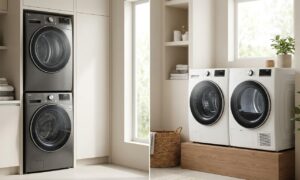
Small-space appliance planning is a common theme for renters. The same logic that helps you pick compact washer dryer combos for small spaces applies here: measure your space carefully before buying anything bulky.
Maintenance for Longevity
Portable ACs need regular upkeep to perform well through the season. Clean or replace filters monthly during heavy use, and empty the condensate tank if your unit doesn’t have a self-evaporative system. Dust the coils occasionally with a soft brush to maintain airflow and efficiency.
Just as understanding appliance lifespan helps you plan replacements, like knowing how long refrigerators typically last before needing replacement, portable ACs usually last 8 to 10 years with proper care. Neglecting filter cleaning is the leading cause of early failure.
Frequently Asked Questions
What size portable AC do I need for a studio apartment?
Most studio apartments between 250 and 350 square feet do well with an 8,000 to 10,000 BTU unit, based on the DOE rating rather than the ASHRAE number. Rooms with lots of sun exposure or high ceilings may need slightly more capacity.
Can I use a portable AC without a window?
Yes, but you’ll need an alternative exhaust route like a sliding door kit, a drop-ceiling vent, or a casement window adapter. Venting is non-negotiable, since the unit must expel hot air somewhere outside the living space.
Are the best portable air conditioners always the loudest or most powerful?
No. Noise varies by model, typically ranging from 42 to 56 decibels, and the best portable air conditioners for apartments are the ones correctly sized for the room rather than the most powerful ones available. Dual-hose units and models with vibration-dampening feet tend to run quieter, which matters more in small apartments where sound carries easily.
Choosing the best portable air conditioners for your apartment comes down to matching BTU capacity to your room size, solving your venting situation realistically, and prioritizing noise levels if you work or sleep nearby. Take measurements first, check your lease for installation restrictions, and you’ll land on a unit that keeps your space comfortable all season long.