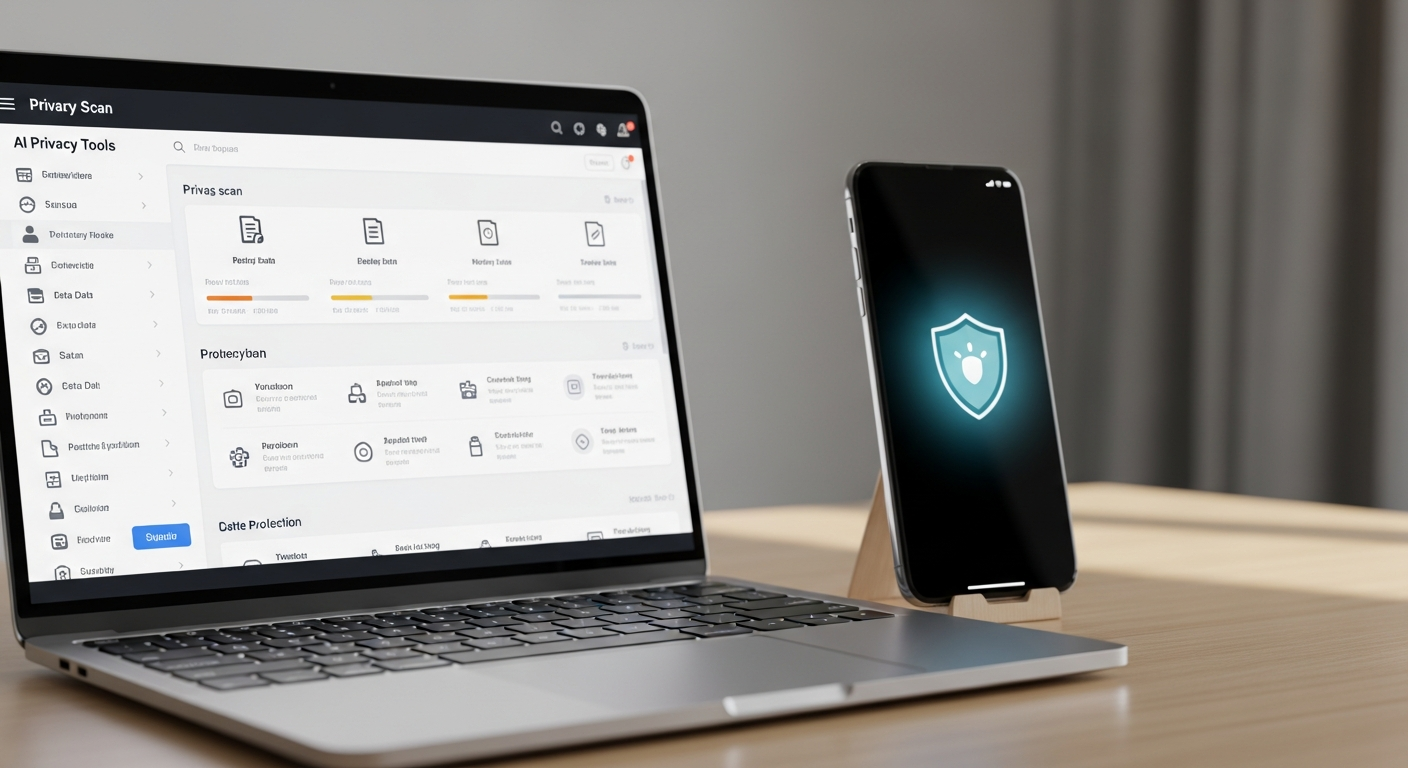
AI data privacy tools are quickly becoming essential software for anyone worried about chatbots memorizing personal details or data brokers reselling their information. In 2026, these tools scan the web, monitor AI training pipelines, and automatically request data removal on your behalf. This guide breaks down what they do, how to pick one, and which categories of tools actually deliver results.
Your digital footprint is bigger than you think. Every form you fill out, every app you download, and every AI chatbot conversation adds another data point that can end up in a broker’s database or a model’s training set. The right privacy tool helps you find those exposures and shut them down before they cause real harm.
Why AI Data Privacy Tools Matter in 2026
Large language models are trained on massive datasets scraped from public and sometimes semi-private sources. That means your old forum posts, resumes, or social profiles could theoretically influence how a model responds. On top of that, traditional data brokers still buy and sell your address, phone number, and browsing habits.
This double exposure is why AI data privacy tools have grown in popularity. They combine classic data-broker opt-out automation with newer AI-specific scanning that checks whether your personal data appears in model outputs or training documentation.
Regulators are also tightening rules around AI transparency, which gives these tools more leverage. Many now include automated opt-out requests tied to specific AI vendors, not just marketing databases.
What to Look for in AI Data Privacy Tools
Not every privacy app covers the same ground. Before subscribing, check whether a tool actually addresses AI-specific risks or just handles legacy broker removals.
- AI training opt-out support: Look for tools that submit removal requests directly to major AI companies, not just ad networks.
- Continuous monitoring: One-time scans are less useful than ongoing alerts when new leaks appear.
- Broker coverage breadth: The best services track hundreds of data broker sites, not a handful.
- Dark web and breach alerts: Some tools flag when your email or password shows up in a leaked dataset.
- Clear reporting: A simple dashboard showing what was found and removed builds trust and saves time.
- Transparent pricing: Avoid tools that hide recurring fees behind a free trial.
Comparing these factors side by side helps you avoid paying for redundant features across multiple subscriptions.
Comparing the Main Categories of Tools
Consumer privacy software generally falls into three buckets. Understanding the differences helps you choose based on your biggest concern.
Data Broker Removal Services
These platforms automate opt-out requests across data broker networks. They are the most mature category and typically show measurable results within a few weeks. Many now bundle basic AI-model opt-out requests as an added feature.
AI-Specific Scrubbing Tools
Newer entrants focus specifically on detecting whether personal information appears in AI training sets or chatbot outputs. They send takedown requests to AI vendors and track compliance over time. This category is evolving quickly as regulations catch up with the technology.
Browser and Device-Level Privacy Shields
These tools block tracking scripts, mask your IP address, and limit what data leaves your device in the first place. They act as a preventive layer rather than a cleanup crew, stopping data from being collected before it ever reaches a broker or model.
Many privacy-conscious users combine all three: a broker removal service for cleanup, an AI-specific scrubber for model exposure, and a browser shield for prevention.
How to Choose the Right Fit for You
Start by identifying your biggest concern. If you’ve noticed spam calls or unwanted mail, a broker removal service should be the priority. If you’re worried about AI chatbots surfacing your personal details, an AI-specific scrubbing tool matters more.
Budget also plays a role. Some services charge monthly, while others offer annual plans with a discount. Test a free trial when available, and read the fine print on how many broker sites are actually covered.
Finally, consider how the tool fits into your broader digital workflow. If you already use several AI-powered apps for productivity, it’s worth reviewing how they handle your data too. For example, our breakdown of the best AI meeting assistants of 2026 covers how those tools store and process recorded conversations, which is another privacy consideration worth checking.
If you use AI tools for job hunting, our guide to the best AI resume builders in 2026 also explains what happens to your uploaded personal details after you generate a resume.
Common Mistakes to Avoid
Even with the right tool, users often undermine their own privacy efforts. Here are a few habits worth breaking.
- Reusing the same password across accounts, which makes breach exposure far more damaging.
- Ignoring app permissions that allow unnecessary data collection.
- Assuming a single scan is enough, when continuous monitoring catches new leaks over time.
- Sharing sensitive documents with AI note-taking or writing tools without checking their data retention policy. Our review of AI note-taking apps in 2026 highlights which platforms offer stronger privacy controls.
Small adjustments to daily habits often matter as much as the software itself.
Looking Ahead: Privacy in an AI-Driven World
As more everyday tools rely on AI, from image generators to coding assistants, personal data protection will keep evolving. If you’re curious how creative AI tools handle uploaded content, our comparison of the best AI image generators of 2026 covers data usage policies for popular platforms.
Developers should also pay attention, since code snippets and comments can contain sensitive information. Our roundup of the best AI chatbots for coding in 2026 touches on how these platforms manage submitted code privacy.
Staying informed about how each AI tool handles your data is just as important as choosing a dedicated privacy scrubber. Combining smart tool choices with cautious habits gives you the strongest defense against leaks.
Frequently Asked Questions
Do AI data privacy tools really stop AI models from using my data?
They can reduce exposure by submitting opt-out and removal requests to AI vendors, but results depend on each company’s compliance process. No tool can guarantee complete removal from datasets already used for training.
Are free privacy tools worth using instead of paid services?
Free tools can help with basic monitoring, but paid AI data privacy tools usually offer broader broker coverage and continuous scanning. For serious ongoing protection, a paid plan is generally more reliable.
How often should I run a privacy scan?
Most experts recommend continuous monitoring rather than one-time scans, since new data brokers and leaks appear regularly. Many AI data privacy tools now offer automated monthly or real-time checks.