AI legal chatbots have moved from novelty to genuine research tool, but not all of them give answers you can trust. In 2026, these assistants can draft letters, explain basic rights, and summarize contracts in seconds. The real question is which ones are accurate enough to rely on, and which ones simply sound confident while getting details wrong.
This guide compares the leading consumer-facing legal chatbots on accuracy, jurisdiction coverage, and failure points. We’ll also flag the situations where no chatbot should replace a licensed attorney.
What AI Legal Chatbots Actually Do Well
Most AI legal chatbots excel at explaining general legal concepts in plain language. They can define terms like “tenant rights” or “small claims court,” summarize a lease, or outline the steps to file a complaint.
They also handle repetitive document tasks efficiently. Many users rely on them to draft demand letters, generate simple contracts, or review terms of service before signing.
- Plain-language explanations: Breaking down statutes and legal jargon for non-lawyers.
- Document drafting: Creating templates for leases, NDAs, or dispute letters.
- Initial triage: Helping users decide whether an issue needs a lawyer at all.
- Contract summaries: Highlighting key clauses, deadlines, and obligations quickly.
If you deal with contracts often, pairing a legal chatbot with a dedicated review tool can save time. Our breakdown of the best AI contract review tools covers options built specifically for catching risky clauses.
Where AI Legal Chatbots Fall Short
Accuracy drops sharply once questions get jurisdiction-specific. Laws vary by state, country, and even county, and many chatbots blend rules from different regions without flagging the mix.
Another common failure is overconfidence. A chatbot may present an outdated statute or a repealed law as current fact, with no warning that it could be wrong. This is especially risky in fast-changing areas like employment law or immigration policy.
Complex disputes involving multiple parties, conflicting evidence, or nuanced case law are also beyond what any chatbot should attempt. These situations require human judgment, not pattern-matching.
Comparing Accuracy and Jurisdiction Coverage
When evaluating AI legal chatbots, three factors matter most: how current their legal data is, how well they handle regional differences, and how clearly they disclose uncertainty.
Tools With Broader Jurisdiction Awareness
Some platforms are built around specific countries or legal systems, which improves accuracy for localized questions like landlord-tenant disputes or consumer protection claims. These tools typically ask for your location before answering, a strong sign of careful design.
Tools With General, Global Answers
Broader, general-purpose AI assistants can answer legal questions too, but they often default to U.S.-centric frameworks. This makes them less reliable for users outside the United States, or for highly localized rules like rent control ordinances.
A reliable chatbot should always ask clarifying questions about your location and situation before giving specific advice. If it jumps straight to a confident answer without asking, treat that answer cautiously.
Red Flags That Signal You Need a Real Attorney
AI legal chatbots are helpful for research, but certain warning signs mean it’s time to stop and call a professional.
- Money or liberty is at stake: Criminal charges, custody disputes, or large financial claims need licensed representation.
- The chatbot gives conflicting answers: If you ask the same question twice and get different responses, accuracy is unreliable.
- Deadlines are involved: Statutes of limitations and court filing dates carry real consequences if miscalculated.
- The issue spans multiple jurisdictions: Cross-border or multi-state cases require specialized legal knowledge.
- You need the advice to hold up in court: Chatbot output is not legal advice and won’t protect you in litigation.
Think of these tools as a starting point, not a final verdict. They’re best used to prepare smart questions for a real consultation, saving billable hours once you do hire counsel.
How to Choose the Right AI Legal Chatbot
Picking the right tool depends on what you need it for. Someone drafting a simple rental agreement has different requirements than someone researching employment termination rights.
Before trusting any output, verify claims against an official government or court website. Most legal chatbots include disclaimers stating they don’t provide formal legal advice, and those disclaimers exist for good reason.
It also helps to compare how these tools fit into your broader digital toolkit. Just as people now rely on AI scheduling assistants to manage deadlines, or AI job search tools to streamline applications, AI legal chatbots work best as one piece of a larger efficiency strategy rather than a standalone solution.
If you’re building out a personal productivity stack alongside legal research, it’s also worth checking tools in adjacent categories, such as AI study planners for organizing case research or coursework.
Frequently Asked Questions
Are AI legal chatbots accurate enough to replace a lawyer?
No. AI legal chatbots are useful for general research and document drafting, but they lack the judgment and accountability of a licensed attorney. Use them for preparation, not final decisions.
Can AI legal chatbots give advice specific to my state or country?
Some can, especially tools designed with jurisdiction-aware features that ask for your location first. Always double-check jurisdiction-specific answers against official legal resources before acting on them.
Is it safe to share personal legal documents with an AI legal chatbot?
Treat sensitive documents carefully. Review the platform’s privacy policy, avoid uploading highly confidential information, and prefer tools with clear data-handling disclosures.
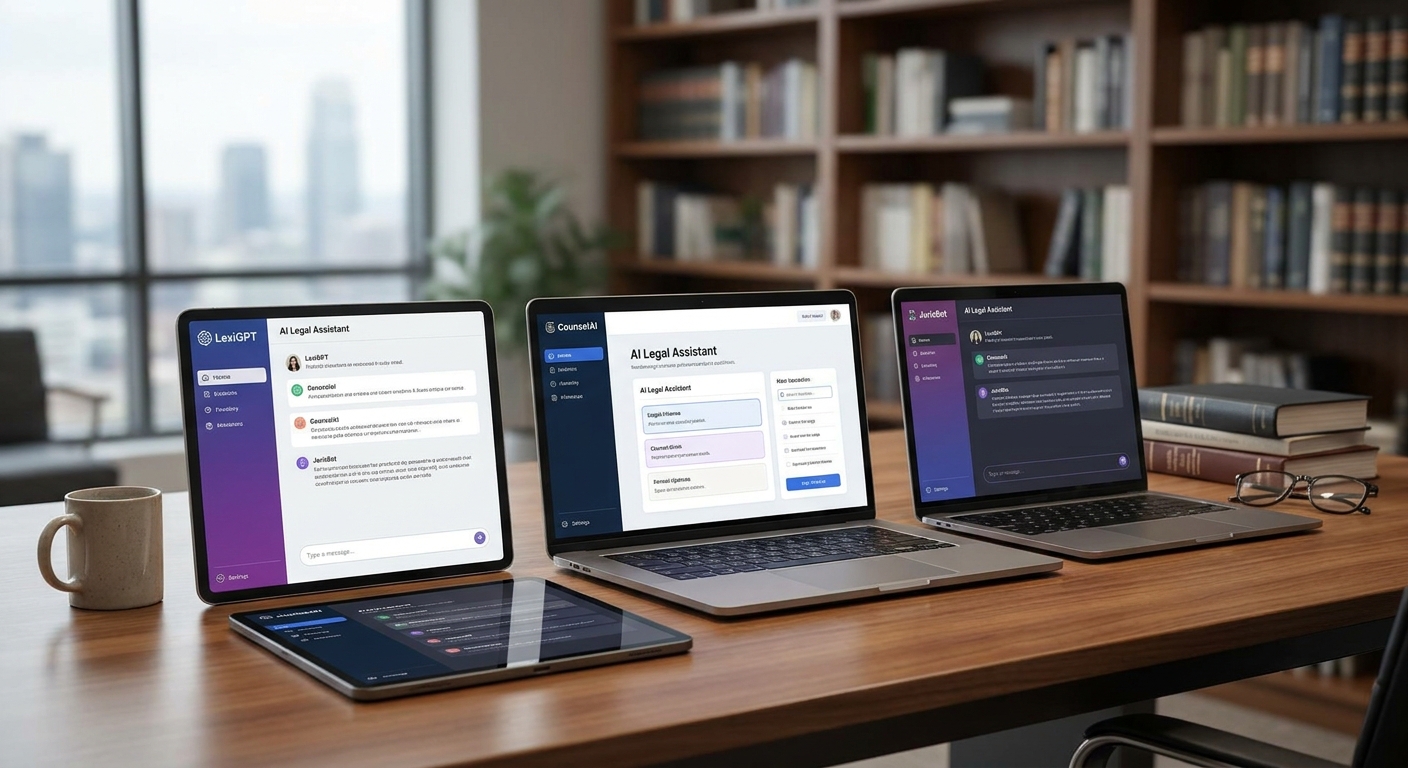
A person using a laptop at a home desk, with a legal document and scales of justice icon visible on the screen, representing an AI legal chatbot interface
Laptop screen showing an AI legal chatbots interface with a document and scales of justice icon
[“AI legal chatbots”, “legal technology”, “AI tools 2026”, “consumer AI”, “legal research”]