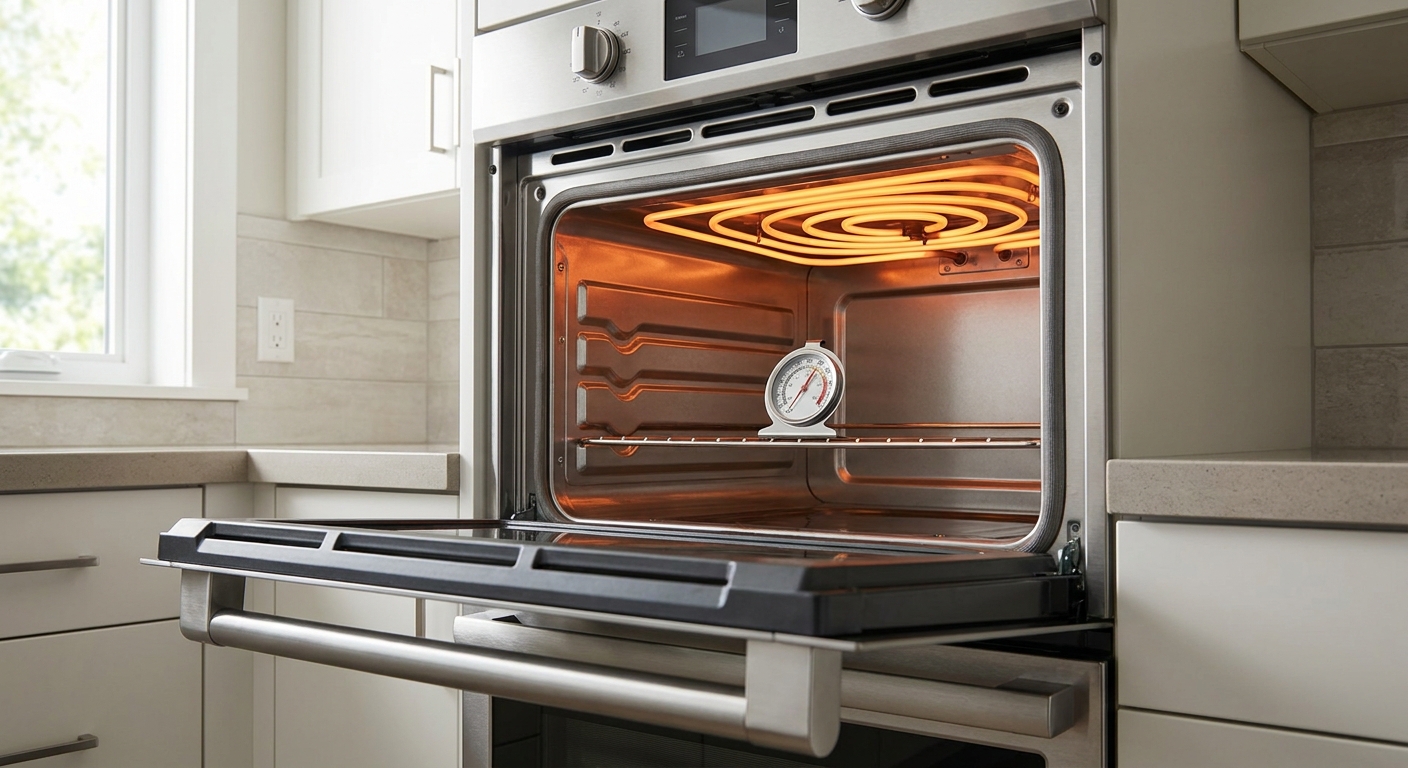
If your oven takes long to preheat, something is usually interfering with its heating element, igniter, or internal sensor. The good news is that most causes are easy to diagnose, and several can be fixed without calling a technician. Let’s walk through why an oven takes long to preheat in the first place, and how to get it back to heating up quickly.
A properly working oven should reach 350°F in about 10 to 15 minutes. If yours is taking 20, 30, or even 45 minutes, that’s a clear sign something needs attention. When an oven takes long to preheat, it wastes energy, throws off your cooking times, and can lead to bigger repair bills down the road.
Common Reasons an Oven Takes Long to Preheat
There are a handful of usual suspects behind an oven that takes long to preheat. Some are mechanical, some are electrical, and some are simply due to age and wear.
- Thermostat drift: Over years of use, the thermostat sensor can lose accuracy, telling the oven it’s hotter than it actually is, which is a leading reason an oven takes long to preheat.
- Worn igniter (gas ovens): A weak igniter struggles to light the burner quickly, slowing the whole preheat cycle.
- Failing heating element (electric ovens): A damaged or partially burned-out element can’t produce full heat output.
- Insulation gaps: Door seals or cavity insulation that have degraded let heat escape as fast as it builds.
- Dirty or blocked vents: Grease buildup around vents can restrict airflow and trap heat where it shouldn’t be.
- Power supply issues: Low voltage or a weak gas line connection can reduce the energy reaching the heating components.
Thermostat Drift: The Silent Culprit
Thermostat drift is one of the most common reasons an oven takes long to preheat. The sensor inside the cavity reads temperature and tells the control board when to cycle the heating element on or off.
When this sensor becomes inaccurate, it may think the oven has reached temperature before it actually has. This causes the element to shut off early, stretching out the real preheat time even though the display says “ready.” Thermostat drift is why an oven can take long to preheat even when every other part looks fine.
You can test this with an inexpensive oven thermometer. Place it inside, set the oven to 350°F, and compare the reading once the oven signals it’s preheated. A gap of more than 25 degrees usually points to a thermostat or sensor problem, and it explains why that oven takes long to preheat compared to when it was new.
Igniter and Heating Element Wear
Gas and electric ovens fail in different ways, so it helps to know which type you have before troubleshooting why your oven takes long to preheat.
Gas Ovens
A gas oven’s igniter has to glow hot enough to open the gas valve and light the burner. As igniters age, they take longer to reach that threshold. If you notice a delay before the burner even ignites, the igniter is likely wearing out and may need replacement.
Electric Ovens
Electric ovens rely on a coil or hidden heating element. Look for an element that doesn’t glow evenly, has dark spots, or shows visible blistering. These are signs it’s losing efficiency and should be replaced.
Insulation Gaps and Door Seals
Even a perfectly functioning heating system can struggle if heat keeps escaping. Door gaskets compress and wear out over time, creating small gaps you might not notice visually. This is another reason an oven takes long to preheat even when the heating element itself is healthy.
Run your hand around the door edge while the oven is preheating. If you feel warm air leaking out, the gasket likely needs replacing. This is a low-cost fix that often makes a noticeable difference in how fast your oven takes long to preheat versus heating up on schedule.
Step-by-Step Fixes You Can Try at Home
Before assuming the worst, work through these steps in order. Many homeowners solve the slow-preheat issue without any professional help.
- Clean the oven cavity and vents. Grease and food debris can block airflow and trap heat unevenly.
- Inspect the door seal. Replace it if it’s cracked, flattened, or visibly damaged.
- Test with an oven thermometer. Compare actual temperature to the display reading.
- Check for a visibly weak element or igniter. If it glows unevenly or struggles to light, it likely needs replacing.
- Recalibrate the thermostat. Many ovens have a calibration setting in the control panel; check your manual for instructions.
- Verify your home’s power or gas supply. Low voltage or gas pressure issues can affect multiple appliances, not just the oven.
When to Call a Technician vs. Replace the Oven
If cleaning, recalibrating, and inspecting the seal don’t solve the problem, it’s time to bring in a professional. A technician can test the igniter, heating element, and thermostat with precise tools you likely don’t have at home, and confirm exactly why your oven takes long to preheat.
Replacement becomes the smarter choice when the oven is older than 10 to 12 years, when repair costs approach half the price of a new unit, or when multiple components are failing at once. Before deciding, it’s worth reading about whether an extended warranty is worth it, since that can change the math significantly.
If you do decide to replace it, timing matters. Check out our guide on the best time to buy appliances for the biggest discounts so you don’t overpay for a new oven.
Preventing Future Preheat Delays
Once your oven is working properly again, a little maintenance goes a long way toward making sure it never takes long to preheat again. Clean it regularly, inspect the door seal every few months, and avoid slamming the door, which can loosen internal components over time.
If you’re upgrading your kitchen setup entirely, our roundup of best small kitchen appliances for apartments in 2026 can help you plan a more efficient cooking space. And if other appliances are acting up too, our guide on refrigerator not cooling causes and fast fixes covers a similarly common household headache.
Frequently Asked Questions
Why does my oven take long to preheat all of a sudden?
A sudden change usually points to a specific failure, such as a dying igniter, a damaged heating element, or a thermostat that just started drifting. Gradual slowdowns, on the other hand, are more often tied to wear and buildup over time, which explains why an oven takes long to preheat more and more each month.
Is it normal for an oven to take 20 minutes to preheat?
Most modern ovens preheat to 350°F within 10 to 15 minutes. If your oven takes long to preheat, meaning 20 minutes or more, that’s on the slow side and usually indicates reduced efficiency somewhere in the heating system.
Can I fix a slow-preheating oven myself?
Yes, in many cases. Cleaning vents, replacing a door gasket, and recalibrating the thermostat are all tasks a homeowner can handle. Replacing an igniter or heating element is also doable with basic tools, though a technician can help if you’re unsure why your oven takes long to preheat.