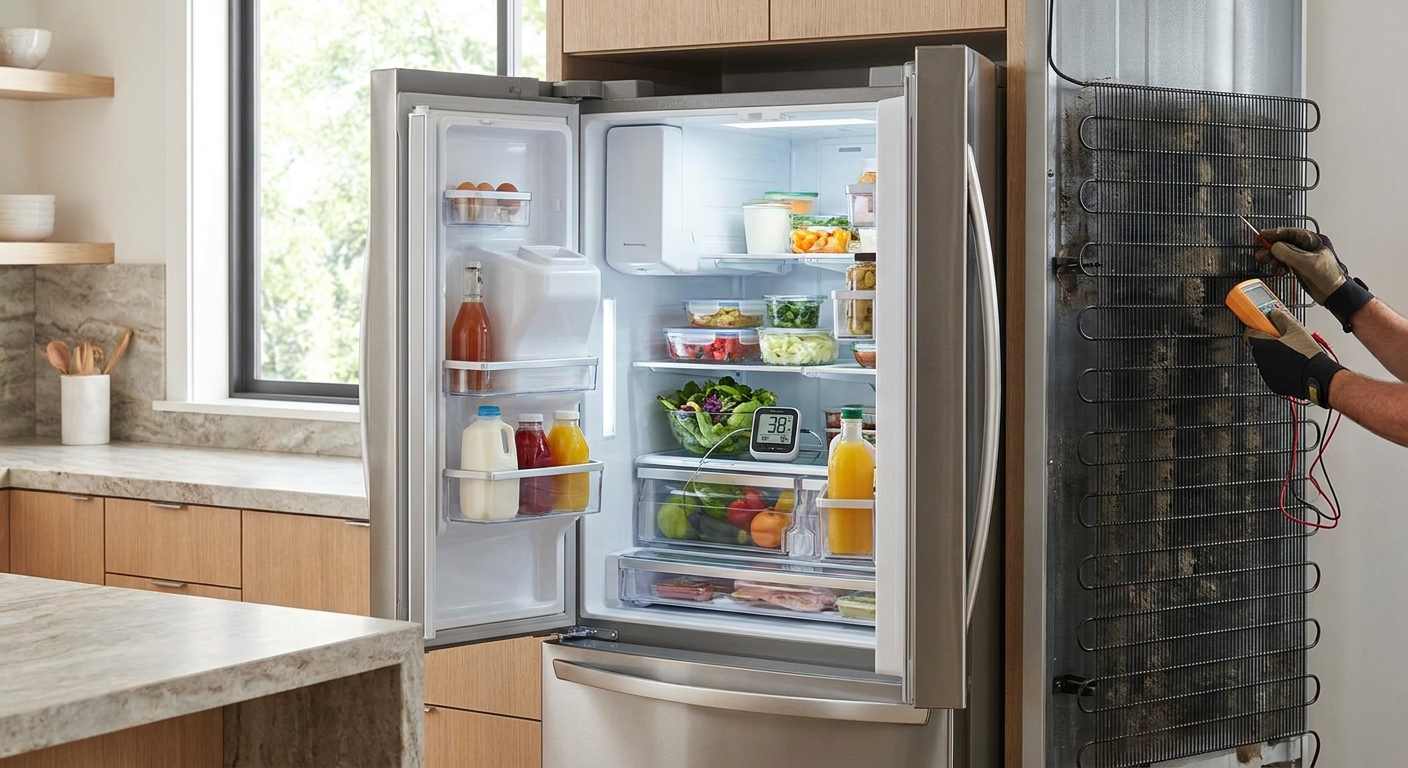
A refrigerator not cooling properly is one of the most stressful appliance problems, especially when groceries are on the line. The good news is that many causes are simple to diagnose and fix without calling a technician. This guide walks you through the most common culprits, quick fixes you can try today, and how to tell when it’s time for professional repair or a replacement.
Before you panic and toss your food, take a few minutes to check the basics. Most cooling issues fall into a handful of predictable categories, and once you know what to look for, troubleshooting becomes much less intimidating.
Why Is My Refrigerator Not Cooling?
A refrigerator not cooling usually points to one of three areas: airflow, temperature settings, or a mechanical component like the compressor or condenser coils. Dirty coils, blocked vents, and worn-out seals are the most frequent offenders.
Age also matters. Older units naturally lose efficiency over time, and parts like fan motors or start relays wear down. If your fridge is over ten years old, mechanical failure becomes more likely than a simple settings issue.
Common Causes at a Glance
- Dirty condenser coils: Dust and pet hair trap heat, forcing the compressor to work harder.
- Blocked air vents: Overpacked shelves restrict cold air circulation inside the fridge.
- Faulty door seals: Cracked or loose gaskets let cold air escape and warm air in.
- Thermostat set too high: An accidental bump can raise the internal temperature.
- Failing evaporator fan: Without airflow, cold air never reaches the fridge compartment.
- Compressor issues: A dying compressor can’t circulate refrigerant properly.
Quick DIY Fixes to Try First
Before scheduling a service call, run through these simple checks. Many refrigerator not cooling problems resolve with a small adjustment rather than a costly repair.
1. Check the Temperature Setting
Confirm the thermostat is set between 35°F and 38°F for the fridge and 0°F for the freezer. Kids, guests, or a recent cleaning can accidentally shift the dial.
2. Clean the Condenser Coils
Unplug the unit and locate the coils, usually behind or beneath the fridge. Vacuum away dust and debris gently. Clean coils release heat efficiently, helping the compressor run normally again.
3. Inspect the Door Seals
Close the door on a piece of paper and try to pull it out. If it slides out easily, the seal may be worn. Replacing a gasket is inexpensive and often solves the problem instantly.
4. Give It Breathing Room
Refrigerators need a few inches of clearance from the wall for proper ventilation. Pushing the unit too close to cabinetry can trap heat and reduce cooling performance.
5. Don’t Overload the Shelves
Blocked vents inside the fridge prevent cold air from circulating. Rearrange items so nothing covers the vents directly.
When to Call a Repair Technician
If you’ve tried the fixes above and your refrigerator not cooling issue persists, it may be time to bring in a professional. Some signs point clearly toward a mechanical failure rather than a simple fix.
- The compressor makes loud clicking, buzzing, or humming noises.
- The freezer stays cold, but the fridge section stays warm.
- Frost builds up unevenly or excessively inside the freezer.
- The unit runs constantly without ever reaching set temperature.
A licensed technician can test the compressor, refrigerant levels, and electrical components safely. Attempting these repairs yourself can be dangerous and may void your warranty.
Repair or Replace? How to Decide
Cost and age are the two biggest factors in this decision. If your refrigerator is under eight years old and the repair costs less than half the price of a new unit, repair usually makes sense.
However, if your fridge is older, has needed multiple repairs, or the compressor has failed, replacement is often the smarter long-term investment. Newer models are also significantly more energy-efficient, which can offset the upfront cost over time.
While you’re evaluating kitchen appliances, it’s worth reviewing other purchases too. If you’re upgrading multiple appliances at once, check out our comparison on choosing between a range and a wall oven to see which fits your kitchen layout best.
Preventing Future Cooling Problems
Routine maintenance extends the life of your refrigerator and helps you avoid sudden breakdowns. Clean the coils every six months, check door seals annually, and avoid overloading shelves.
Keeping your kitchen appliances running smoothly goes beyond the fridge. If your dishwasher has been leaving residue behind, our guide on why dishwashers leave spots on glasses covers similar troubleshooting steps. And if you’re dealing with laundry room issues too, our article on a washer that won’t drain offers comparable quick fixes.
Small habits, like not blocking vents and checking seals regularly, go a long way toward preventing another refrigerator not cooling episode down the road.
Frequently Asked Questions
Why is my refrigerator running but not cooling?
This usually means the compressor is running, but airflow or refrigerant flow is blocked. Dirty coils, a failed evaporator fan, or low refrigerant are common causes. If cleaning the coils doesn’t help, a technician can test refrigerant levels safely.
How long does it take for a refrigerator to cool down again after a fix?
After adjusting settings or cleaning coils, most refrigerators take four to eight hours to return to normal temperature. Avoid opening the door frequently during this period to help it stabilize faster.
Is it worth repairing an old refrigerator that’s not cooling?
It depends on the age and repair cost. If your fridge is under eight years old and the repair is affordable, it’s usually worth fixing. Older units with major component failures are often better replaced with a newer, more efficient model.