The range vs wall oven debate comes down to your budget, kitchen layout, and cooking habits: a range costs less and fits into one cabinet slot, while a wall oven offers ergonomic comfort and design flexibility at a higher price. Choosing between a range and a wall oven affects your kitchen’s flow for years, so it pays to understand the real differences before you shop.
Both appliances can bake, roast, and broil beautifully. The real range vs wall oven decision usually hinges on space, installation costs, and how your household cooks day to day. Let’s break down what actually separates these two setups.
Range vs Wall Oven: The Core Difference
A range combines a cooktop and oven into a single unit. It sits at counter height, plugs into one spot, and handles both stovetop and baking duties.
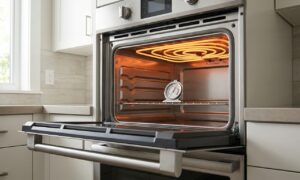
A wall oven setup separates the two. The oven installs at eye level (or wherever you like) inside cabinetry, while the cooktop sits independently on the counter. In the range vs wall oven comparison, this means two appliances, two installations, and two purchase decisions instead of one.
Range vs Wall Oven Cost Comparison: Upfront and Installation
Price is often the deciding factor for many buyers weighing a range vs wall oven purchase. Ranges are generally the more budget-friendly option because you’re buying one appliance instead of two.
- Range: Lower upfront cost, simpler installation, and typically no cabinetry modifications needed if replacing an existing range.
- Wall oven + cooktop: Higher combined cost since you’re purchasing two separate units, plus custom cabinetry or a dedicated cutout is often required.
- Electrical and gas work: Wall ovens may need a new circuit if installed somewhere without existing hookups, adding to labor costs.
- Long-term value: Ranges are easier to swap out later since they use standard dimensions; wall ovens may require a specific cutout size for replacement.
If you’re building a new kitchen from scratch, the cost gap between a range and a wall oven narrows because cabinetry is being built either way. In a simple appliance swap, ranges almost always win on price.
Layout and Kitchen Design Considerations
Layout is where the range vs wall oven decision gets interesting. Ranges are compact and self-contained, making them ideal for smaller kitchens or straightforward renovations.
Wall ovens shine in kitchens with more square footage. Because the oven and cooktop are separate, you gain flexibility in where each one goes. A cooktop can sit on an island while the oven tucks into a wall column nearby.
This separation also opens up design possibilities that a range simply can’t offer. Some homeowners install double wall ovens for extra capacity, something a standard range can’t easily replicate.
When a Range Makes More Sense
- You have a smaller kitchen or a tight renovation budget.
- You’re replacing an existing range and want a simple swap.
- You prefer one appliance instead of coordinating two.
When a Wall Oven Setup Makes More Sense
- You’re doing a full kitchen remodel with custom cabinetry.
- You want the oven at a comfortable eye-level height, reducing bending.
- You need extra oven capacity through a double wall oven.
Cooking Performance and Ergonomics: Range vs Wall Oven
Both setups can deliver excellent cooking results, but daily use feels different. Wall ovens sit at a more comfortable height, which reduces bending and makes checking on food easier, especially for taller cooks or those with mobility concerns.
Ranges keep everything within arm’s reach at counter height, which some cooks prefer for quick monitoring of both stovetop and oven simultaneously. This ergonomic factor is often the tipping point in the range vs wall oven decision for households with specific physical needs.
Cooktop performance depends more on the fuel type than whether it’s part of a range or standalone unit. If you’re deciding between gas and electric cooking surfaces, our guide on induction vs gas cooktop options breaks down the performance differences in detail.
Maintenance and Longevity
Ranges and wall ovens both need regular care to perform well over time. Self-cleaning cycles, gasket checks, and occasional professional servicing apply to both types.
Since wall ovens are a bigger investment, protecting that investment matters. Similarly, other kitchen appliances need attention to avoid costly early replacement. If your dishwasher has been acting up, it’s worth reviewing how long dishwashers typically last before deciding whether to repair or replace it.
Kitchen appliance decisions rarely happen in isolation. Many buyers weigh the range vs wall oven question alongside other purchases, like whether to go with a chest or upright freezer for extra storage.
Making the Final Decision Between a Range and a Wall Oven
Start with your budget and available space. If you’re not remodeling and just need a replacement, a range is usually the practical choice.
If you’re planning a full kitchen renovation and want design flexibility plus ergonomic benefits, a wall oven and separate cooktop combination is worth the extra investment.
Either way, measure your space carefully and confirm electrical or gas requirements before purchasing. A quick consultation with your installer can prevent costly surprises and help settle the range vs wall oven question for your specific kitchen.
Frequently Asked Questions
Is a wall oven more expensive than a range?
Yes, typically. In the range vs wall oven cost comparison, a wall oven paired with a separate cooktop costs more upfront than a single range because you’re buying two appliances and often need custom cabinetry or additional electrical work.
Can I replace a range with a wall oven setup?
You can, but it usually requires more extensive renovation. You’ll need to build a cabinet cutout for the oven and find counter space for a separate cooktop, which adds labor and material costs.
Which option is better for small kitchens?
A range is generally better for small kitchens since it combines cooking functions into one compact footprint, saving valuable cabinet and counter space.
What is the main difference in the range vs wall oven debate?
The main difference is that a range combines the cooktop and oven into one counter-height unit, while a wall oven is a separate, built-in appliance installed at eye level with an independent cooktop elsewhere in the kitchen.
Whichever you choose in the range vs wall oven comparison, prioritize your kitchen’s layout, your budget, and how you actually cook. The right fit makes daily meal prep smoother for years to come.