How many amps does a refrigerator use? Most residential refrigerators draw between 3 and 6 running amps, though the startup surge can briefly spike to 15 amps or more. Knowing how many amps a refrigerator uses matters before you plug in a new fridge, remodel a kitchen, or add an outlet, because the wrong circuit can trip breakers or create a fire hazard.
In this guide, we break down typical refrigerator amperage, explain how compressors cause power spikes, and walk through the circuit and outlet requirements homeowners need to know. We’ll also cover common mistakes that lead to nuisance tripping and energy waste, so you can answer the question “how many amps does a refrigerator use” with confidence whenever you’re planning wiring, buying an appliance, or troubleshooting a breaker.
How Many Amps Does a Refrigerator Use on Average?
A standard full-size refrigerator typically uses 3 to 6 amps while running normally. This is called the running or “steady-state” current. It’s the power needed to keep the compressor cycling and the interior cold once the unit has started. If you’re asking how many amps does a refrigerator use in everyday operation, this running range is the number that matters most.
However, refrigerators don’t draw a flat amount of current all the time. The compressor motor needs a quick burst of extra power to start spinning, and that burst can temporarily push amperage much higher. So when people ask how many amps a refrigerator uses, the honest answer depends on whether you’re measuring running current or startup current.
- Compact or mini fridges: roughly 1 to 2 amps running.
- Standard top-freezer or bottom-freezer fridges: roughly 3 to 5 amps running.
- Large side-by-side or French door models: roughly 4 to 6 amps running.
- Startup surge (any size): can briefly spike to 10 to 15 amps for a fraction of a second.
Because of this surge, electricians size circuits with extra headroom rather than matching the running amperage exactly. That buffer is what prevents your breaker from tripping every time the compressor kicks on.
Why Refrigerator Amperage Varies by Model
Not every refrigerator pulls the same current, which is why there’s no single universal answer to how many amps a refrigerator uses. Several factors influence how many amps a specific unit draws, and understanding them can help you predict your own appliance’s behavior.
Size is the biggest factor. Larger refrigerators have bigger compressors and more interior space to cool, so they generally draw more current than compact models. This is a key piece of the answer anytime someone asks how many amps does a refrigerator use compared to a mini fridge.
Age and efficiency also play a role. Older refrigerators, especially those made before modern energy standards, tend to use more electricity than newer ENERGY STAR-rated models. Features like ice makers, water dispensers, and dual compressors add extra amperage too.
Finally, the compressor type matters. Variable-speed or inverter compressors modulate their speed instead of switching fully on and off, which can smooth out amp draw and reduce sudden spikes.
What Size Circuit Does a Refrigerator Need?
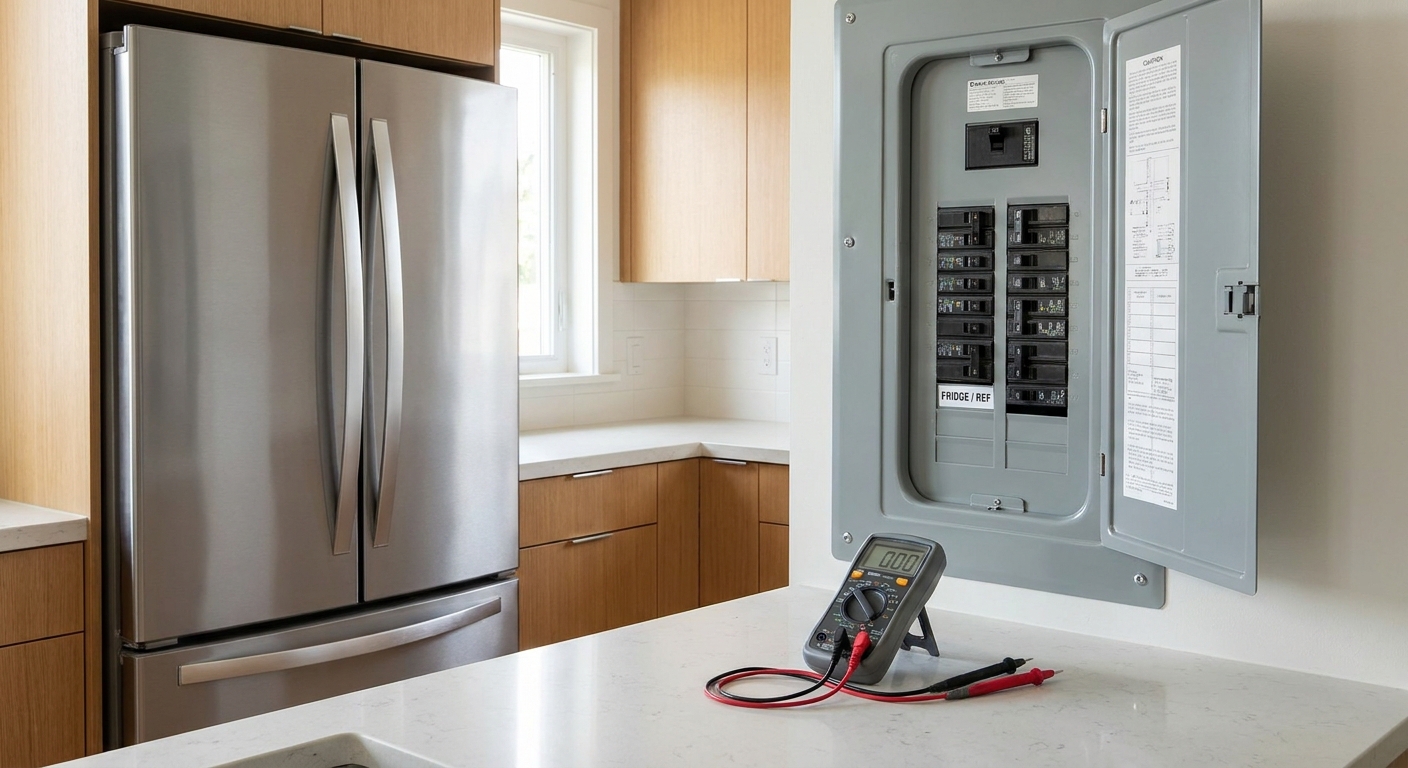
Most kitchens use a dedicated 15-amp or 20-amp, 120-volt circuit for the refrigerator. A dedicated circuit means the outlet serves only the fridge, with no other appliances sharing the line.
This dedicated setup matters for two reasons. First, it prevents the fridge’s startup amp surge from tripping a breaker shared with other devices. Second, it avoids nuisance outages that could spoil food during a long power interruption.
Local electrical codes and manufacturer manuals are the final word on circuit sizing, so always check the nameplate on your specific unit. If you’re unsure how many amps your refrigerator uses, a licensed electrician can verify that your kitchen wiring matches the appliance’s requirements.
How to Find Your Refrigerator’s Exact Amperage
You don’t have to guess how many amps your refrigerator uses. Every refrigerator has a data plate, usually located on the interior wall, back panel, or near the door hinge. Checking this label is the most reliable way to confirm how many amps your specific refrigerator uses before doing any wiring work.
Look for a line listing voltage and amperage, often written as something like “120V, 4.5A.” That number is your running amperage, straight from the manufacturer.
If the label only lists wattage, you can estimate amps by dividing watts by volts. For example, a 600-watt refrigerator on a 120-volt circuit draws about 5 amps.
Avoiding Breaker Trips and Wiring Mistakes
Breaker trips are usually a sign that the refrigerator is sharing a circuit with too many other appliances. A microwave, toaster, or coffee maker on the same line can push the combined amp load past the breaker’s limit.
To keep things running smoothly:
- Confirm the refrigerator has its own dedicated circuit.
- Avoid plugging other high-draw appliances into the same outlet.
- Use a grounded, three-prong outlet rated for the fridge’s amperage.
- Skip extension cords, which can overheat under sustained amp load.
- Have an electrician inspect older wiring before installing a new, larger fridge.
If you’re planning a broader kitchen update, it’s worth reviewing amp requirements for other major appliances too. Our dishwasher amp requirements wiring guide covers similar circuit-planning steps, and it pairs well with refrigerator planning since both appliances often sit on adjacent circuits.
Refrigerators and Overall Kitchen Energy Use
A refrigerator runs around the clock, which makes it one of the biggest continuous energy users in the home. Even a modest number of amps adds up over a full day of cycling on and off, which is why many homeowners want a precise answer to how many amps does a refrigerator use before estimating their monthly electric bill.
If you’re trying to manage household electricity use, it helps to look beyond the fridge. Our guide to spotting hidden power drain from energy vampire appliances explains how devices you rarely think about can quietly raise your bill.
Kitchen appliances as a group deserve attention too. For instance, comparing water use between washing methods, as we do in our dishwasher versus hand washing water comparison, can reveal savings opportunities elsewhere in the kitchen.
And if a remodel has you rethinking the whole utility room layout, our comparison of stackable versus side-by-side washer dryer setups offers a useful parallel for planning space and circuits efficiently.
When to Call a Professional
Most homeowners can read a data plate and confirm a dedicated circuit without special training. But some situations call for an electrician, especially if you’re still unsure how many amps your refrigerator uses after checking the nameplate.
If your breaker trips repeatedly, if your kitchen has older two-prong outlets, or if you’re installing a refrigerator significantly larger than your old one, get a professional opinion. Faulty wiring is a safety risk, not just an inconvenience.
It’s also smart to address unrelated kitchen issues while an electrician or technician is on site. If you’ve also noticed a garbage disposal humming instead of working properly, or an appliance that isn’t draining water correctly, bundling repairs can save time and service calls.
Frequently Asked Questions
How many amps does a refrigerator use on a standard outlet?
Most refrigerators use 3 to 6 running amps on a standard 15-amp or 20-amp, 120-volt outlet. The outlet should be dedicated to the fridge alone to handle the compressor’s startup surge safely.
How many amps does a refrigerator use during startup?
While running amperage stays in the 3 to 6 amp range, the compressor’s startup surge can briefly push a refrigerator’s amp draw to 10 or even 15 amps for a fraction of a second before settling back down.
How many amps does a refrigerator use compared to a mini fridge?
A full-size refrigerator typically draws 3 to 6 running amps, while a compact or mini fridge usually draws only 1 to 2 amps because of its smaller compressor and interior volume.
Can a refrigerator share a circuit with other appliances?
It’s not recommended. Sharing a circuit increases the risk of overloading the breaker, especially when the fridge’s compressor starts up. A dedicated circuit is the safer, code-compliant choice.
Does a bigger refrigerator always use more amps?
Generally yes, larger refrigerators draw more current due to bigger compressors and added features like ice makers. However, newer energy-efficient models can sometimes use fewer amps than older, smaller units.
Understanding how many amps does a refrigerator use helps you plan wiring confidently, whether you’re installing a first fridge or upgrading to a larger model. Check the data plate, confirm a dedicated circuit, and consult an electrician whenever you’re unsure how many amps does a refrigerator use in your specific kitchen setup. A little preparation now prevents tripped breakers and costly surprises later.