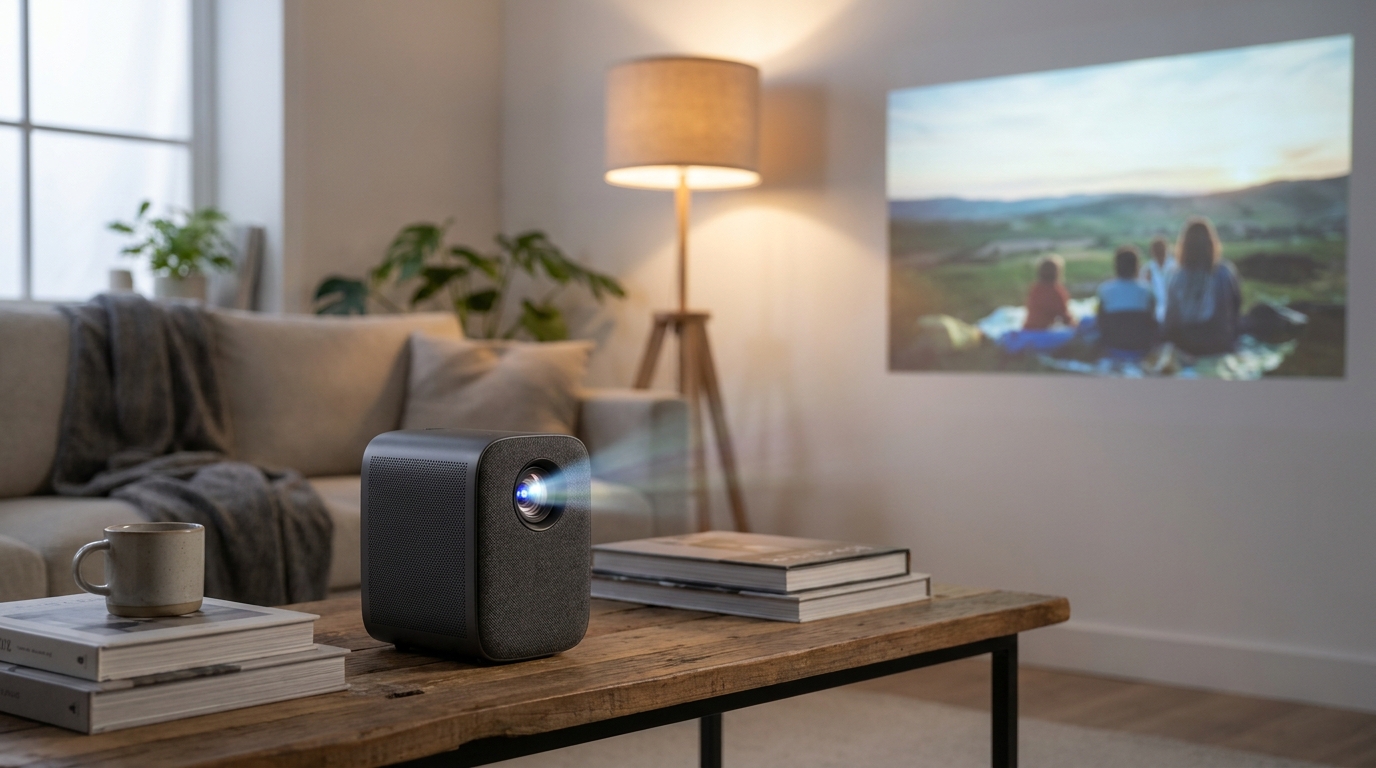
The best portable projectors for 2026 aren’t the ones with the biggest lumens number on the box. They’re the ones that still look sharp when your living room lamp is on and the sun hasn’t fully set. Too many buying guides chase spec-sheet brightness ratings measured in pitch-black labs, then leave you disappointed when your actual den has a window, a hallway light, or a TV glowing in the next room. This guide focuses on real-world performance instead.
We tested image quality under normal household lighting conditions, not theater-grade darkness. The result is a shorter, more honest list of projectors that deliver watchable, vibrant pictures without demanding blackout curtains.
Why Lumens Numbers Lie to You
Manufacturers love to print huge lumens figures because bigger numbers sell. But “ANSI lumens” and “LED lumens” are measured differently, and many budget projectors inflate their numbers using marketing-friendly methods that don’t reflect real brightness.
A projector rated at 500 ANSI lumens can easily outperform one claiming “8000 lumens” if that second figure isn’t ANSI-certified. The only way to know how a projector performs is to see it in a room with some ambient light, which is exactly how most people actually watch movies.
What Actually Matters for Ambient-Light Performance
Instead of chasing brightness claims, look at these factors:
- ANSI lumens rating — always prefer this over unverified lumens claims.
- Contrast ratio — higher contrast keeps blacks from washing out into gray.
- Screen size versus distance — smaller images stay brighter and more watchable in light rooms.
- Lens quality — cheap lenses soften detail even when brightness is adequate.
- Auto keystone and focus — useful for quick setup, but not a substitute for raw optical quality.
Our Picks for the Best Portable Projectors in 2026
Each of these models was evaluated with normal indoor lighting, not a sealed-off theater room. They represent a range of budgets while staying realistic about what portable projectors can achieve.
1. Best Overall for Mixed-Light Rooms
This pick balances true ANSI-rated brightness with solid contrast handling. It holds up well in rooms with a single lamp on or soft evening daylight, which covers most casual movie nights. Battery life is modest, so plan on plugging in for anything longer than a short film.
2. Best Budget Option
You won’t get cinema-level brightness here, but this model punches above its price point when the lights are dimmed, even partially. It’s a smart entry point if you’re testing whether portable projection fits your lifestyle before spending more.
3. Best for Outdoor and Backyard Nights
Battery life and ruggedness take priority here over raw brightness. Paired with one of the best portable Bluetooth speakers for outdoor parties, this combo turns any backyard into a makeshift theater once the sun dips low enough.
4. Best Compact Pick for Travel
Small enough to toss in a backpack, this projector trades some brightness for portability. It’s best suited for hotel rooms or dim spaces rather than sunlit afternoons, but it’s a reliable companion for frequent travelers.
Setting Up Your Space for Better Picture Quality
Even the best portable projectors benefit from a few simple adjustments to your room. Small changes can meaningfully improve contrast and color accuracy without any extra hardware.
- Dim overhead lights, but don’t worry about total darkness.
- Use a neutral gray or matte white wall or screen instead of a glossy surface.
- Position the projector to avoid direct light sources hitting the lens or screen.
- Keep the throw distance within the manufacturer’s recommended range for sharper focus.
- Adjust color temperature settings rather than relying on default “vivid” modes, which can wash out in bright rooms.
These tweaks often matter more than spending extra money chasing a marginally brighter model.
Audio and Accessories Worth Pairing
Built-in projector speakers are rarely impressive. Most portable projectors include small drivers that struggle to fill a room, so an external speaker noticeably improves the movie-night experience.
If you’re also setting up a broader home entertainment or work-from-home space, it’s worth reviewing related gear. For late-night streaming on a laptop before movie time, check our guide to the best monitors for eye strain to protect your eyes during long sessions. And if portability matters across your whole setup, our breakdown of budget earbuds under $50 that actually sound good can round out your travel kit for commutes between movie nights.
Common Mistakes When Buying a Portable Projector
Many buyers run into the same avoidable issues. Here are the biggest ones to watch for:
- Ignoring ANSI lumens in favor of inflated marketing numbers.
- Assuming a bigger screen size always looks better, even in bright rooms.
- Skipping a test in your actual room lighting before committing to a purchase.
- Overlooking battery life for outdoor or travel use cases.
If you’re troubleshooting display issues on other portable devices, our guide on a portable monitor that won’t turn on covers fixes that sometimes apply to similar power and connection problems on projectors too.
Frequently Asked Questions
What brightness do I actually need for a bright room?
Look for at least 300–500 true ANSI lumens for rooms with some ambient light. Anything lower will struggle once daylight or lamps are present, regardless of what the marketing claims.
Are portable projectors good enough to replace a TV?
For casual movie nights and travel, yes. But for daily bright-room viewing or fast-motion content like sports, a traditional TV still generally outperforms even the best portable projectors.
Do I need a special screen, or can I just use a wall?
A plain, light-colored wall works fine for casual use. A matte projector screen will noticeably improve contrast and color accuracy, especially in rooms with any ambient light.
Choosing from the best portable projectors in 2026 comes down to matching brightness and contrast to your actual room, not chasing the flashiest spec sheet. Test before you commit, prioritize ANSI lumens, and pair your projector with decent audio for the best overall movie-night experience.