AI study planners are quickly becoming the smartest way for students to prepare for exams without wasting hours on guesswork. Instead of building a static schedule and hoping it works, these tools adjust in real time based on your exam dates, how fast you forget material, and your personal learning pace. The result is less cramming and more targeted review.
In this guide, we compare the top AI study planners of 2026. We look at how they handle spaced repetition, adaptive scheduling, and workload balancing. We also explain who each tool fits best, so you can pick the right one for your situation.
What Makes AI Study Planners Different From Regular Planners
Traditional planners just hold your to-do list. You decide what to study and when. AI study planners go further.
They analyze your syllabus, track your quiz performance, and predict when you’re likely to forget a concept. Then they resurface that topic right before you lose it. This is based on retention curve science, where memory fades predictably over time unless reinforced.
Many tools also factor in your calendar. If you have a part-time job or sports practice, the planner reshuffles study blocks automatically. That flexibility is a major upgrade over paper planners or basic calendar apps.
Top AI Study Planners to Consider in 2026
Here are the standout categories of tools worth evaluating this year. We avoid naming specific pricing tiers since they change often, but we highlight what each type does well.
- Adaptive flashcard schedulers — These apps use spaced repetition algorithms to decide exactly when you should review each card. They are ideal for memorization-heavy subjects like vocabulary, anatomy, or history dates.
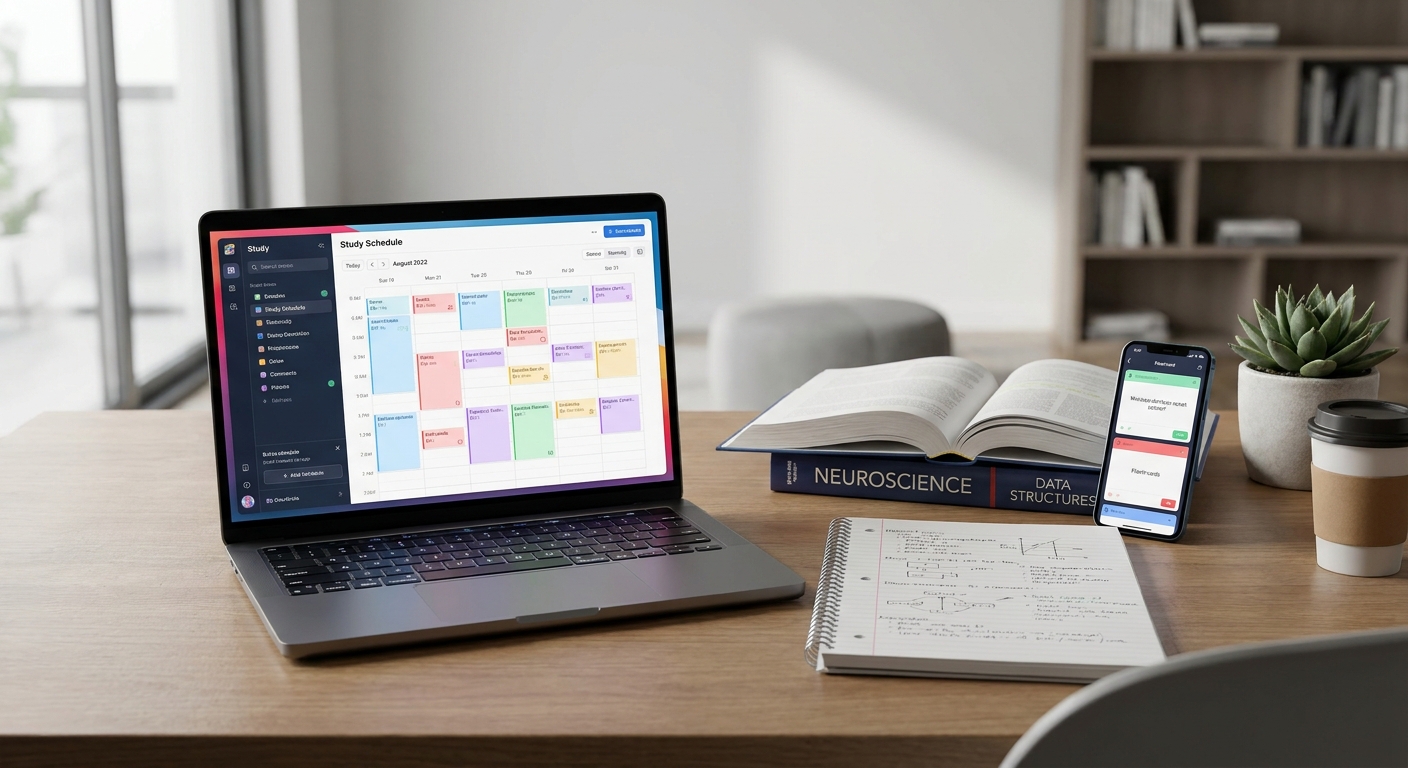
- Full syllabus planners — These tools import your course outline and exam dates, then build a day-by-day roadmap. They are best for students juggling multiple classes at once.
- Pace-matching tutors — These platforms watch how long you take on practice questions and slow down or speed up accordingly. They suit students who need extra support in specific subjects.
- Cram-mode assistants — Built for last-minute prep, these tools compress a semester of material into a prioritized checklist based on what’s most likely to appear on the test.
Most students benefit from combining two types, for example a syllabus planner for daily structure and a flashcard scheduler for memorization.
How AI Study Planners Boost Grades Faster
The biggest grade gains come from timing, not just effort. Studying the right thing at the right moment matters more than studying longer.
AI study planners track what you already know versus what you’re shaky on. They then push more time toward weak spots instead of topics you’ve already mastered. This targeted approach reduces wasted study hours.
They also help prevent last-minute panic. Because the planner spreads review sessions across weeks, students arrive at exam day already familiar with the material. That means less stress and sharper recall during the test itself.
Another advantage is accountability. Many planners send reminders or break large tasks into small daily chunks. This makes procrastination harder and consistency easier to maintain.
Key Features to Look For
Not every AI study planner is built the same way. Before choosing one, check for these core features.
- Exam date syncing — The tool should pull dates directly from your school portal or calendar app.
- Retention tracking — Look for spaced repetition or forgetting-curve modeling, not just simple reminders.
- Workload balancing — The planner should distribute study time fairly across all your classes.
- Progress analytics — Clear dashboards showing mastery levels help you trust the schedule.
- Cross-device access — Mobile and desktop syncing keeps your plan available wherever you study.
If a tool is missing retention tracking, it’s really just a glorified calendar. The adaptive memory piece is what separates true AI study planners from basic scheduling apps.
Who Should Use an AI Study Planner
These tools work well for high school students prepping for standardized tests, college students managing multiple courses, and adult learners studying for certification exams.
They’re especially useful for anyone who tends to cram the night before a test. The adaptive scheduling spreads review earlier, which research on spaced learning consistently supports as more effective than massed cramming.
Busy students juggling work and classes may also want to pair a study planner with a broader productivity system. If you want to manage your full calendar alongside academics, our guide to the best AI scheduling assistants covers tools that handle time-blocking across every part of life, not just coursework.
Students who also want to build healthier daily routines around studying, like sleep and exercise, might find value in our roundup of AI fitness coaching apps, since physical wellbeing directly affects memory retention and focus.
Choosing the Right AI Study Planner for Your Goals
Start by identifying your biggest pain point. If you forget material quickly, prioritize a tool with strong spaced repetition. If you struggle with organization across classes, pick a full syllabus planner instead.
Test a tool for one or two weeks before committing. Most platforms offer free trials, and the real test is whether the schedule actually feels manageable day to day.
Finally, think beyond school. The adaptive planning skills you build now, like breaking big goals into trackable steps, also transfer well later. Students entering the job market may later benefit from similar AI-driven tools, such as those covered in our guide to AI job search tools, which use comparable matching logic to speed up interview prep.
Frequently Asked Questions
Do AI study planners actually improve grades?
They can, mainly by improving timing and consistency. Spaced repetition and retention tracking help students review material before they forget it, which supports stronger long-term recall compared to cramming alone.
Are AI study planners worth it for short-term exam prep?
Yes, especially cram-mode tools that prioritize high-yield topics. They won’t replace weeks of preparation, but they can make last-minute studying far more efficient and focused.
Can AI study planners work for multiple subjects at once?
Most full syllabus planners are designed exactly for this. They balance study time across several classes automatically, which is harder to manage manually once your course load grows.
Choosing among today’s AI study planners comes down to matching the tool to your study habits and goals. Whether you need help memorizing facts or organizing a packed semester, an adaptive planner can turn scattered study sessions into a focused, grade-boosting routine.