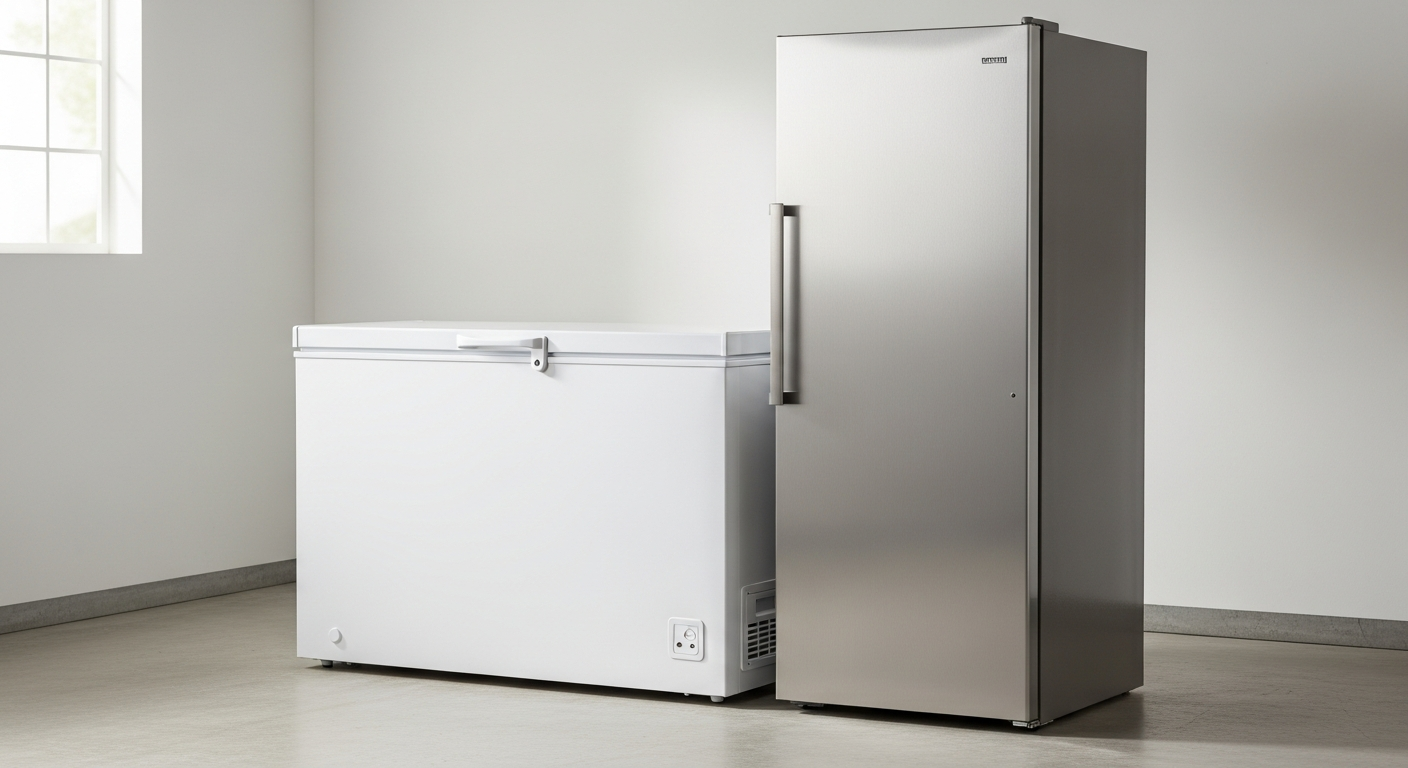
The chest vs upright freezer debate comes down to a simple trade-off: chest freezers usually offer better energy efficiency and storage capacity, while upright freezers deliver easier organization and a smaller footprint. Choosing between them depends on your space, budget, and how you store food long-term.
Both styles keep food frozen reliably. But the way you access, organize, and pay to run them can differ quite a bit. This chest vs upright freezer guide breaks down the practical differences so you can pick the right freezer for your home.
Chest vs Upright Freezer: The Core Differences
A chest freezer opens from the top, like a cooler. Cold air sinks and stays inside when you lift the lid, which helps it run efficiently. An upright freezer opens like a refrigerator, with a front door and built-in shelves.
In the chest vs upright freezer comparison, chest models tend to hold more usable space for the same footprint. Upright freezers make it easier to see and grab items without digging. Your daily habits matter as much as the specs here.
Storage Efficiency
Chest freezers are known for maximizing every inch of interior space. There are no shelves cutting into capacity, so you can stack boxes, bags, and bulk cuts of meat efficiently.
Upright freezers trade some capacity for structure. Shelves and door bins divide the space, which reduces total volume slightly but improves accessibility.
- Chest freezers: Best for bulk buying, whole animals, or large batches of homemade meals.
- Upright freezers: Best for everyday items you need to find quickly, like frozen vegetables or ice cream.
Energy Use Compared
Energy efficiency is one of the biggest reasons shoppers lean toward chest freezers when weighing a chest vs upright freezer purchase. Because cold air doesn’t spill out when the lid opens, the compressor doesn’t have to work as hard to recover the temperature.
Upright freezers lose more cold air every time the door opens. Frost-free models, which many uprights use, also consume more energy than manual-defrost units to prevent ice buildup.
If lowering your utility bill is a priority, a chest freezer generally has the edge. That said, actual usage patterns—like how often the freezer is opened—also affect real-world energy consumption.
Footprint and Placement
Upright freezers have a clear advantage in tight spaces. Their vertical design takes up less floor area, similar to how kitchen layout choices matter when comparing a counter-depth refrigerator to a standard fridge.
Chest freezers need more horizontal floor space and a bit of clearance for the lid to open fully. They work well in garages, basements, or utility rooms where floor space isn’t at a premium.
Before buying either type, measure your intended spot carefully. Include space for ventilation and door or lid clearance.
Organization and Accessibility
Upright freezers win on organization. Shelves, drawers, and door storage let you sort food by category, so nothing gets lost at the bottom for months.
Chest freezers require more planning. Many owners use wire baskets or bins to separate items and avoid the classic “frozen archaeology” problem of digging through layers of food.
If you rotate stock often, an upright design saves time. If you store large quantities and access them less frequently, a chest freezer’s simplicity works fine.
Cost, Maintenance, and Long-Term Value
Chest freezers often cost less upfront for the same capacity as an upright model. They also tend to have simpler mechanical designs, which can mean fewer parts to repair over time.
Upright freezers, especially frost-free versions, may need occasional attention to seals, fans, or defrost systems. If you already deal with appliance quirks, it’s worth understanding common issues—much like troubleshooting a refrigerator making unusual noises before assuming the worst.
Both freezer types are generally durable when properly maintained. Regular defrosting (for manual models) and keeping the door or lid seal clean will extend the life of either style, no matter which side of the chest vs upright freezer debate you land on.
Smart Features and Modern Options
Newer freezer models increasingly include digital temperature controls, alarms, and even connected monitoring. These upgrades mirror a broader shift toward connected kitchens, as covered in our look at how smart appliances are transforming homes.
If you’re building out a fully connected kitchen or utility room, it’s worth checking how a new freezer might integrate with other smart devices, similar to trends discussed in this guide to smart appliance upgrades.
Which Freezer Fits Your Lifestyle?
Choosing between a chest and upright freezer really comes down to three questions:
- How much floor space do you have available?
- Do you prioritize energy savings or easy organization?
- Do you store food in bulk or grab items frequently?
Large families who buy in bulk or hunt, garden, or meal-prep extensively often prefer chest freezers. Smaller households that value quick access and tidy shelves usually lean toward upright models. Answering these questions honestly is the fastest way to settle the chest vs upright freezer decision for your household.
Whichever style you choose, proper appliance care matters. Understanding maintenance basics—like the tips in our guide to fixing a dishwasher that isn’t drying properly—shows how small maintenance habits keep any appliance running efficiently longer.
Frequently Asked Questions
Which is more energy efficient, a chest or upright freezer?
Chest freezers are generally more energy efficient because cold air stays inside when the lid opens, reducing how hard the compressor works. This is one of the most common points raised in any chest vs upright freezer comparison.
Do chest freezers really hold more food than upright freezers?
Yes, chest freezers usually offer more usable storage for their size since they lack shelving that reduces interior volume in upright models.
Is an upright freezer easier to organize than a chest freezer?
Yes, upright freezers have shelves and bins that make it simpler to sort and find food quickly, unlike the single open cavity of a chest freezer.
Which option wins the chest vs upright freezer debate for small kitchens?
For tight spaces, upright freezers usually make more sense because their vertical design takes up less floor area than a chest freezer’s horizontal footprint.
In the end, the chest vs upright freezer decision comes down to your space, storage habits, and how much you value convenience over efficiency. Either option can serve your household well if it matches how you actually cook, shop, and store food.