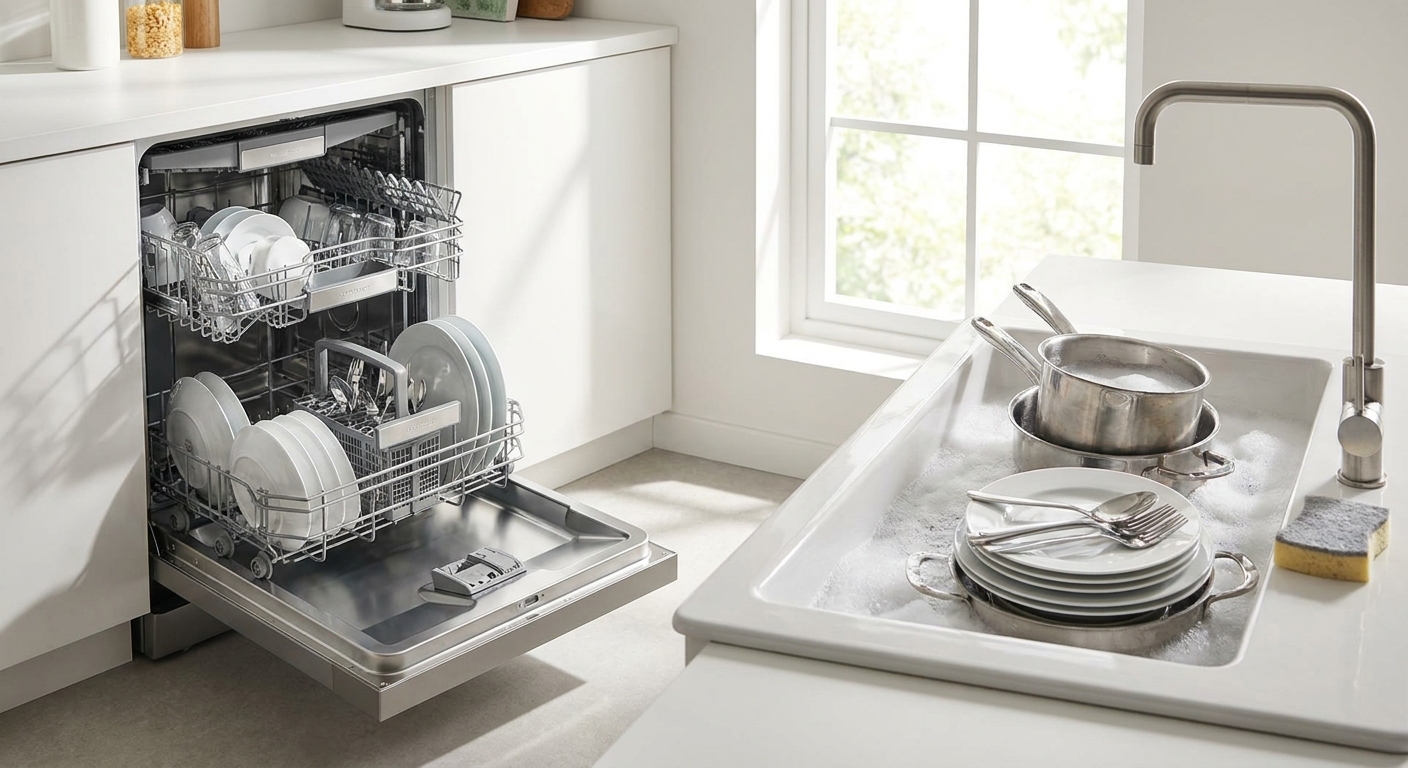
When it comes to dishwasher vs hand washing water usage, modern dishwashers almost always win, using a fraction of the water that hand washing requires. That surprises a lot of people who assume scrubbing dishes by hand is the greener choice. Let’s break down the actual numbers behind the dishwasher vs hand washing water question and see why the dishwasher usually comes out ahead.
For decades, hand washing felt like the frugal, eco-friendly option. No machine, no electricity, just a sink and some elbow grease. But once you measure dishwasher vs hand washing water use carefully, the story changes.
Dishwasher vs Hand Washing Water: The Core Numbers
A typical modern, ENERGY STAR-certified dishwasher uses around 3 to 4 gallons of water per full load. That covers rinsing, washing, and a final rinse cycle for a standard load of dishes.
Hand washing the same load, by contrast, often uses significantly more. Most people leave the tap running while scrubbing, which can burn through 15 to 27 gallons of water in a single session. Even careful hand washers who fill a basin instead of running water continuously still tend to use more than a dishwasher cycle, which is why the dishwasher vs hand washing water gap is so consistent across households.
The gap widens further with older or inefficient dishwasher models. Machines built before the early 2000s can use well over 10 gallons per cycle, so an older unit may not beat a careful hand washer. This is why appliance age matters just as much as the method itself when comparing dishwasher vs hand washing water use.
Why Dishwashers Use Less Water
Dishwashers are engineered specifically for efficiency. They use targeted spray jets, precise water temperature control, and shorter contact time to clean dishes thoroughly without excess waste.
Here are the main reasons dishwashers tend to outperform hand washing in the water-use comparison:
- Closed-loop water use: The same water recirculates during the wash cycle instead of flowing continuously down the drain.
- Precision spraying: Jets target dishes directly, reducing the volume needed to cover the same surface area.
- Automated cycle timing: Sensors and presets stop the cycle at the optimal point, avoiding wasted water.
- Consistent water temperature: Machines heat water internally, so there’s no waiting for tap water to warm up.
Hand washing simply doesn’t have these built-in controls. Most people instinctively run more water than necessary, especially when rinsing suds off multiple items one at a time, which tilts the dishwasher vs hand washing water balance even further toward the machine.
Energy Use: The Other Half of the Equation
Water savings are only part of the eco-conscious buyer’s calculation. Energy use matters too, since both methods require heated water to cut through grease effectively, and it factors into any honest dishwasher vs hand washing water comparison.
Dishwashers heat water internally and often more efficiently than a home’s water heater, especially with newer models. Many also include energy-saving modes that reduce electricity use during drying cycles, relying on residual heat or air drying instead of a heating element.
Hand washing typically relies on your water heater running continuously while you scrub, which can actually use more energy over a long washing session than a single dishwasher cycle. If you’re also curious about appliances quietly drawing power when you’re not using them, our guide on spotting hidden power drain from appliances is worth a read.
When Hand Washing Might Still Make Sense
There are situations where hand washing is the more practical choice, even if it isn’t the most water-efficient one in the dishwasher vs hand washing water equation.
- Small loads: Washing just a few items doesn’t justify running a full dishwasher cycle.
- Delicate or oversized items: Pots, knives, and nonstick cookware often fare better washed by hand.
- No dishwasher access: Renters or smaller kitchens may not have one installed at all.
- Broken or malfunctioning units: A dishwasher that isn’t draining properly can push water use higher than expected. If that sounds familiar, check our troubleshooting guide on appliances not draining water and simple fixes.
In these cases, hand washing with a filled basin rather than running water is the better habit to build.
Getting the Most Water Savings From Your Dishwasher
Owning a dishwasher doesn’t automatically guarantee water savings. How you use it matters just as much as the appliance itself when it comes to the dishwasher vs hand washing water outcome.
Run full loads only. Half-empty cycles waste the water-saving advantage the machine is designed to deliver. Skip pre-rinsing under the tap, since modern dishwashers are built to handle food residue without it.
Choose eco or energy-saving cycle settings when available. These modes are specifically calibrated to minimize both water and electricity use. If you’re shopping for a new unit, make sure your kitchen’s electrical setup can support it; our simple wiring guide for dishwasher amp requirements explains what to check before installation.
If you’re also upgrading other laundry appliances alongside your kitchen, our comparison of stackable vs side-by-side washer dryer setups can help with space planning decisions.
Is It Worth Investing in a New Dishwasher?
For households currently relying on hand washing, switching to a certified efficient dishwasher often pays off in both water and utility bills over time, making the dishwasher vs hand washing water tradeoff an easy call for many families. The upfront cost is a common hesitation point.
Before buying, it’s also worth considering protection plans. Our breakdown of whether extended warranties on appliances are worth it walks through the data so you can decide if added coverage makes financial sense for a dishwasher purchase.
Frequently Asked Questions
Does a dishwasher really use less water than hand washing?
Yes, in most cases. The dishwasher vs hand washing water comparison consistently shows that modern, efficient dishwashers use roughly 3 to 4 gallons per load, while hand washing under running water can use 15 gallons or more for the same amount of dishes.
What’s the most water-efficient way to hand wash dishes?
Fill one basin with soapy water for washing and a second with clean water for rinsing instead of letting the tap run continuously. This single change can cut hand washing water use significantly and narrow the dishwasher vs hand washing water gap.
Do older dishwashers still save water compared to hand washing?
Not always. Dishwashers built before the early 2000s can use considerably more water per cycle than newer ENERGY STAR models, sometimes enough to lose their advantage over careful hand washing.
Ultimately, the dishwasher vs hand washing water debate usually favors the machine, especially for larger households running full loads regularly. Pairing an efficient dishwasher with smart habits, like skipping pre-rinsing and running only full loads, gives eco-conscious buyers the best of both worlds: cleaner dishes and a lighter footprint on your water bill.