The smart doorbell vs alarm system debate comes down to one question: do you want to see trouble or stop it? A smart doorbell records and alerts you, while a monitored alarm system can summon help and scare intruders away mid-break-in. Most homes actually need both, but knowing what each one does best will save you money and stress in 2026.
Smart Doorbell vs Alarm System: The Core Difference
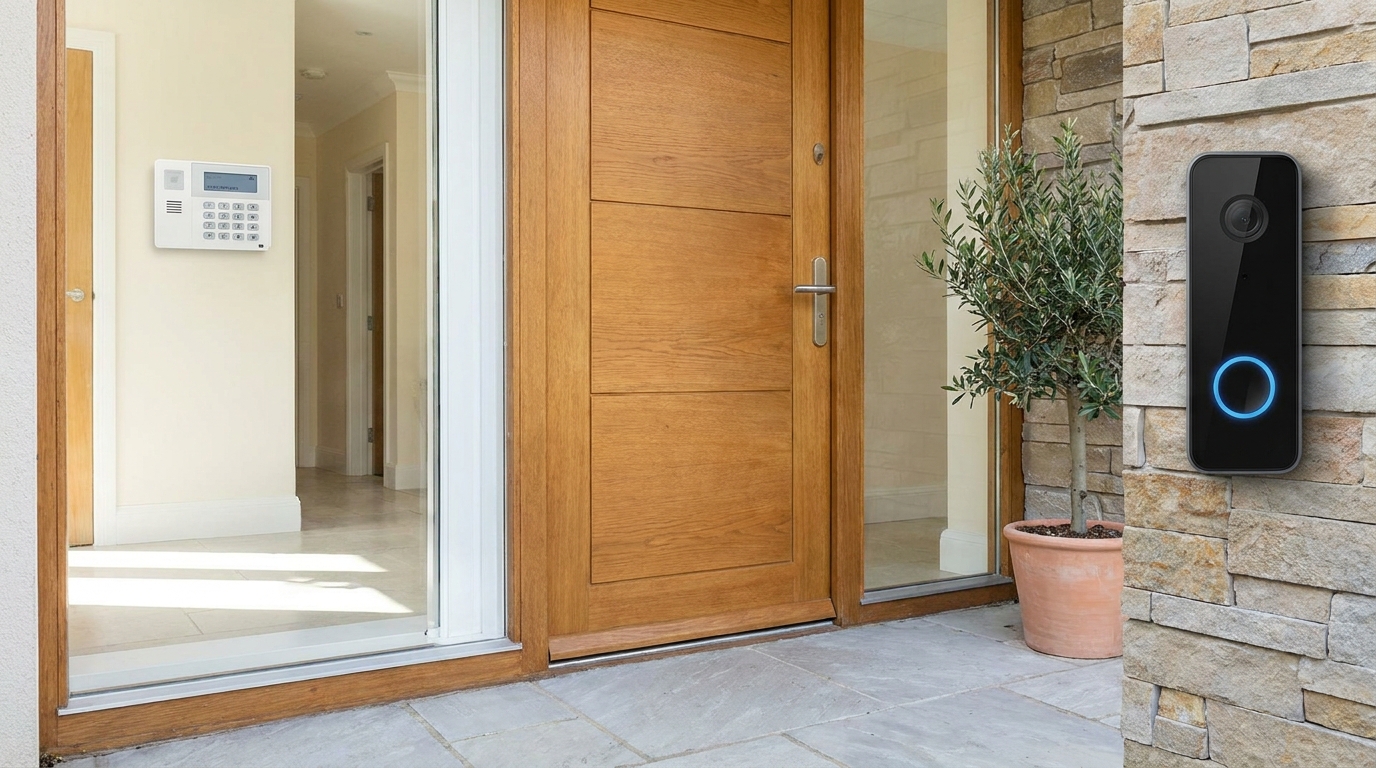
A smart doorbell is a camera and speaker mounted at your entryway. It detects motion, records video, and lets you talk to visitors from your phone.
A traditional alarm system is a network of door, window, and motion sensors tied to a control panel. When triggered, it sounds a siren and often alerts a monitoring center that can call police.
In the smart doorbell vs alarm system comparison, the doorbell is reactive and observational. The alarm system is designed to actively interrupt a crime in progress.
Deterrence: Who Actually Scares Off Burglars?
Visible cameras do deter some opportunistic criminals who want to avoid being recorded. A smart doorbell’s presence alone can make a porch pirate or casual trespasser think twice.
However, determined burglars often wear hoods or move quickly past doorbell cameras, especially if they enter through a back door or window the doorbell cannot see.
Alarm systems add a different kind of deterrence: noise and uncertainty. A loud siren signals that police may already be on the way, which pushes most intruders to flee within seconds.
- Smart doorbell: Deters porch theft and casual snooping through visible recording.
- Alarm system: Deters forced entry through audible alarms and the threat of police response.
- Combined setup: Covers both the approach and the actual entry point.
Does a Camera Alone Stop a Break-In?
Rarely on its own. A doorbell camera documents the event, which helps investigations and insurance claims, but it does not physically stop someone from forcing a door.
If you’re also tracking belongings for claims after an incident, pairing video evidence with organized records matters. Our home inventory app security guide explains how to protect that claim data once you have it.
Response Speed: Seconds Matter
When a break-in happens, response time decides outcomes. Smart doorbells send a notification, but someone still has to see it, react, and call for help.
Monitored alarm systems skip that delay. The moment a sensor trips, the monitoring center is alerted automatically and can dispatch police without waiting on you to check your phone.
This is the biggest practical gap in the smart doorbell vs alarm system discussion. Notifications are useful, but automated dispatch is faster and more reliable during an active threat.
What Happens If You Miss the Alert?
Doorbell notifications can get buried, delayed by weak Wi-Fi, or simply missed while you sleep. An alarm system doesn’t depend on you noticing anything; the siren and monitoring center do the work.
Coverage: Where Each System Falls Short
Smart doorbells only watch the front entrance. Side doors, garages, and ground-floor windows stay unmonitored unless you add more cameras.
Alarm systems cover every point of entry you wire with sensors, which is why they’re better suited to whole-home protection.
Neither system is complete on its own. Smart home devices in general come with coverage gaps and data considerations worth understanding before you buy. For example, our smart car data privacy guide and voice assistant eavesdropping lockdown guide both show how connected devices can leave blind spots if you don’t configure them properly. The same caution applies to home security gear.
Cost and Commitment
Smart doorbells are cheaper upfront and usually require no contract. You pay once, plus an optional cloud storage subscription.
Alarm systems often involve installation fees and monthly monitoring costs, but that ongoing fee buys automated 24/7 response.
- Budget-first buyers: A smart doorbell delivers visibility at a lower cost.
- Full-coverage buyers: A monitored alarm system justifies its price with faster intervention.
- Most households: A doorbell plus a basic alarm system offers layered protection without overspending.
Privacy Considerations Before You Buy
Both devices collect footage, location data, and usage patterns. Before installing either, check how your provider stores and shares that information.
If you’re renting a place or house-sitting, it’s also worth checking for hidden cameras that aren’t yours. Our hidden camera detector rental guide walks through sweeping a space for unauthorized devices.
Privacy habits extend beyond doorbells and alarms, too. If you use other connected trackers at home, see our smart pet tracker privacy guide and smart scale data privacy guide for similar data-handling comparisons.
Which One Should You Choose in 2026?
If you live in a low-crime area and mainly worry about package theft, a smart doorbell may be enough.
If you want real protection against forced entry, a monitored alarm system is the stronger foundation.
For most homeowners, the smartest move is layering both: a doorbell for visibility at the front door, and an alarm system for whole-home detection and automated response.
Frequently Asked Questions
Is a smart doorbell enough home security on its own?
A smart doorbell helps you see who approaches your door and can deter casual theft, but it doesn’t stop forced entry through other points of the house. It works best alongside additional sensors or an alarm system.
In the smart doorbell vs alarm system comparison, which responds faster to a break-in?
Monitored alarm systems respond faster because sensors trigger automatic alerts to a monitoring center, which can dispatch police immediately. Smart doorbells rely on you noticing and acting on a notification.
Can I use a smart doorbell and an alarm system together?
Yes, and many security experts recommend it. The doorbell adds visual verification at the entrance, while the alarm system covers windows, side doors, and interior motion for complete coverage.