The e-reader vs tablet debate comes down to one simple question: do you want a device built purely for reading, or one that reads books alongside everything else? If your eyes, battery patience, and wallet matter most, the answer depends on how and where you actually read.
Both devices can hold thousands of books. But the experience of reading on each one is surprisingly different. In this guide, we break down eye strain, battery life, and overall reading comfort so you can make a confident choice.
E-Reader vs Tablet: The Core Difference
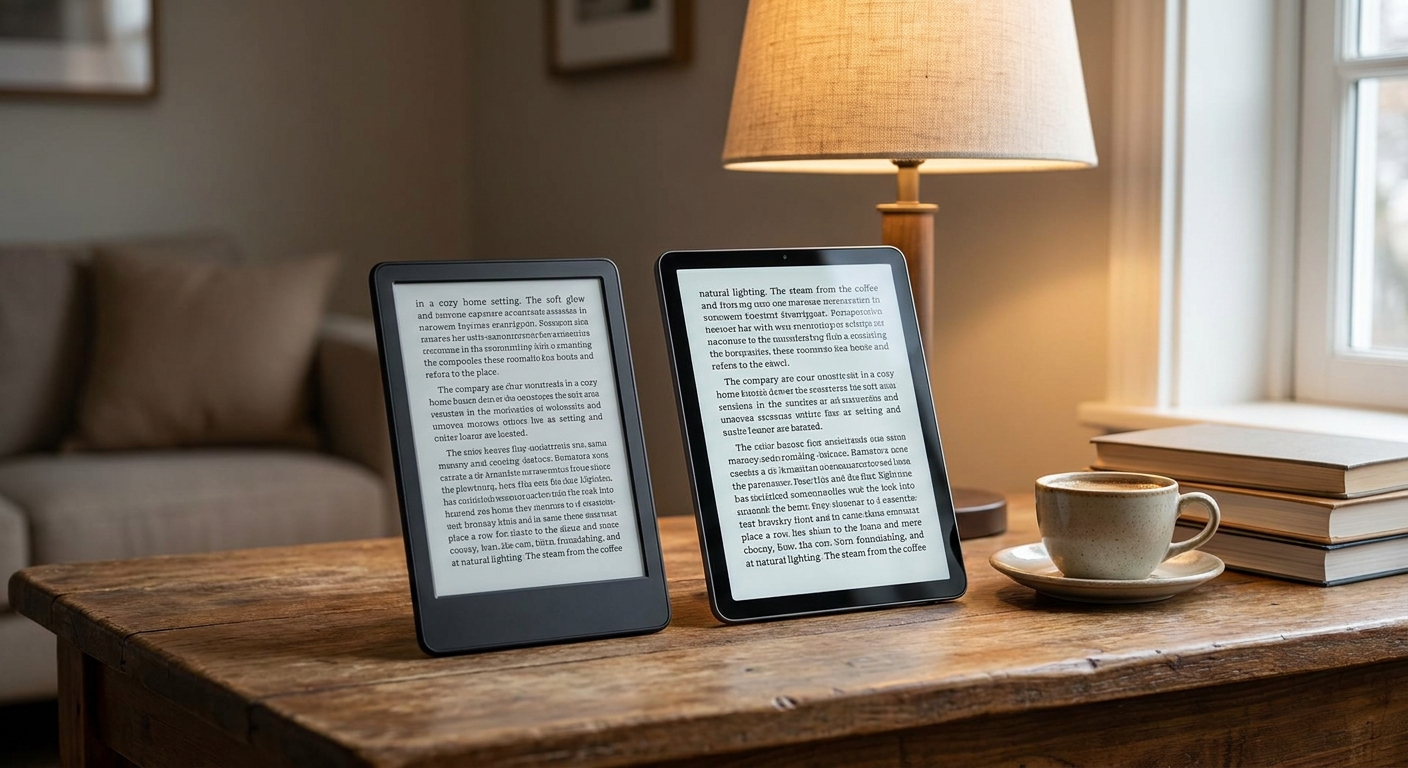
An e-reader, like a Kindle or Kobo, uses E Ink technology. It mimics paper and reflects light instead of emitting it. A tablet, such as an iPad or Android slate, uses a backlit LCD or OLED screen built for video, apps, and browsing.
That single hardware difference shapes almost everything else: comfort, battery life, and price. Understanding it is the first step in the e-reader vs tablet decision.
Eye Strain: Which Screen Is Easier to Read?
E Ink screens are widely considered gentler on the eyes. They don’t emit blue light the way LCD or OLED panels do, and the matte texture reduces glare in bright rooms or outdoors.
Tablets, on the other hand, shine light directly at your eyes. Many offer night mode or blue-light filters, but these are workarounds, not a true fix. If you read for hours before bed or during long commutes, that difference adds up.
- E-readers: Paper-like display, minimal glare, comfortable in sunlight.
- Tablets: Bright and vivid, but can cause fatigue during extended sessions.
- Best for night reading: E-readers, thanks to warm-light settings without screen glow.
Why This Matters for Daily Readers
If you read every day for an hour or more, eye comfort becomes a real factor. Many heavy readers report fewer headaches and less fatigue after switching to E Ink devices.
Battery Life: No Contest Here
This is where the e-reader vs tablet comparison gets lopsided. E-readers sip power because the screen only uses energy when the page changes. A single charge can often last weeks of casual reading.
Tablets, by contrast, run full operating systems, apps, and bright displays. Expect a day or two of mixed use before needing a charge again.
If you travel often, pairing a tablet with a reliable charging setup is worth considering. Our guide to the best portable chargers for travel covers options that keep tablets running on long trips without constant outlet-hunting.
Reading Experience and Comfort
E-readers are lighter and thinner than most tablets, which makes a real difference during long reading sessions. Holding a tablet one-handed for an hour can tire your wrist; an e-reader rarely does.
Tablets, though, offer flexibility. You can highlight text, switch between apps, watch videos, or browse the web between chapters. If you want a single device for reading, note-taking, and entertainment, a tablet wins on versatility.
Page Turns and Navigation
E-readers are built around simplicity: tap or press a button to turn the page, with few distractions. Tablets offer touch gestures, but notifications, emails, and apps are always one tap away, which can interrupt deep reading.
Storage, Apps, and Extra Features
Tablets support multiple reading apps, including Kindle, Kobo, Apple Books, and library apps like Libby. This flexibility means you’re not locked into one ecosystem.
E-readers typically focus on one or two formats and store books locally or via cloud sync. Storage is usually sufficient for thousands of e-books, so space is rarely a dealbreaker for either device.
If you’re using a tablet as your main device for work and reading, you may eventually want more connectivity options. A USB-C hub or docking station can expand ports for external drives, monitors, or keyboards when you’re not reading.
Price and Long-Term Value
E-readers generally cost less than tablets, especially entry-level models. Because they do one job well, manufacturers can keep prices modest without sacrificing reading quality.
Tablets span a wider price range. Budget models exist, but premium tablets with great displays can cost several times more than a dedicated e-reader.
- Choose an e-reader if: You read daily, prioritize eye comfort, and want long battery life.
- Choose a tablet if: You want one device for reading, browsing, and media.
- Consider both if: Your budget allows a dedicated reader plus a general-use tablet.
Which Should You Buy?
There’s no universal winner in the e-reader vs tablet comparison. It depends on your habits. Serious readers who want comfort and battery longevity usually prefer e-readers. Casual readers who also want a do-it-all device often lean toward tablets.
Think about where and when you read most. A subway commuter under bright light has different needs than someone reading in bed at night. Match the device to your routine, not the other way around.
For readers who also rely on other home electronics, it helps to keep your setup efficient. If you’re organizing chargers, cables, and plugs around the house, our guide on how to choose a smart plug can help you manage power for all your devices, not just your reader.
Frequently Asked Questions
Is an e-reader better than a tablet for your eyes?
Yes, in most cases. E-readers use E Ink technology that reflects light rather than emitting it, which reduces glare and blue-light exposure compared to a typical tablet screen.
Do e-readers really have better battery life than tablets?
Generally, yes. E-readers can last weeks on a single charge because the screen only draws power when pages change, while tablets often need daily or near-daily charging.
Can a tablet replace an e-reader completely?
It can, especially if you value versatility over reading comfort. However, dedicated e-readers still offer a more paper-like experience with less eye strain during long sessions.