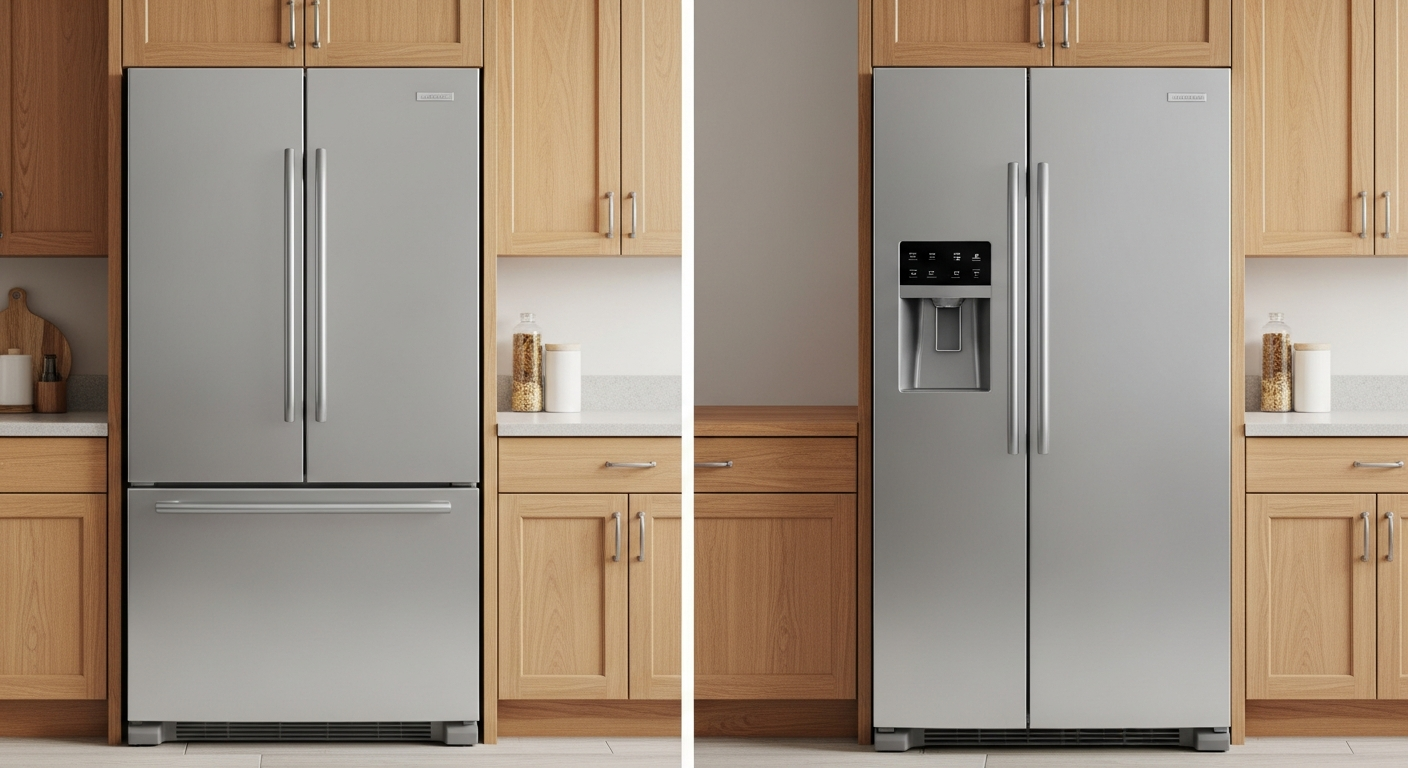
The counter-depth vs standard fridge decision comes down to one question: do you want a flush, built-in look or maximum storage for the money? Counter-depth fridges sit closer to your cabinets, while standard fridges stick out further but hold more groceries. Both choices work well, depending on your kitchen layout and budget.
In this counter-depth vs standard fridge guide, we break down space, capacity, price, and installation tradeoffs so you can pick the fridge profile that actually fits your home. No fluff, just the practical details buyers need before checking out.
Counter-Depth vs Standard Fridge: The Core Difference
A standard refrigerator typically extends several inches beyond your countertop edge. A counter-depth model is designed to align almost flush with your cabinets and counters. Understanding this distinction is the first step in any counter-depth vs standard fridge comparison.
That few inches of difference changes how your kitchen feels. Counter-depth fridges create a streamlined, built-in appearance. Standard fridges prioritize interior space over aesthetics.
Neither option is objectively better in the counter-depth vs standard fridge matchup. It depends on whether your kitchen prioritizes visual flow or storage capacity.
Space Considerations for Your Kitchen Layout
Kitchen layout is often the deciding factor in this comparison. If your fridge sits in a tight alcove or open sightline from the living room, a standard model may jut out awkwardly.
Counter-depth refrigerators solve that problem by sitting nearly flush with surrounding cabinetry. This works especially well in galley kitchens or open-concept homes where the fridge is visible from multiple angles.
Standard fridges, however, are ideal when the appliance sits in a dedicated nook or against a wall where the extra depth won’t disrupt traffic flow. Weighing counter-depth vs standard fridge options against your actual floor plan will save you from a bad fit later.
Questions to Ask About Your Space
- Does the fridge sit in an open area visible from the dining or living room?
- Is there enough clearance for doors and drawers to open fully?
- Will a protruding fridge block a walkway or island?
- Do you have cabinet depth already matched to counter-depth dimensions?
Capacity: What You Give Up for a Sleeker Look
Storage capacity is the biggest tradeoff in the counter-depth vs standard fridge debate. Standard fridges generally offer more usable cubic footage for the same footprint width.
Counter-depth models sacrifice some depth, which reduces interior storage. Families who buy in bulk or meal-prep frequently may find counter-depth shelves tighter than expected.
If storage is your top priority, a standard fridge often delivers more value per dollar. If a streamlined kitchen look matters more, counter-depth is worth the smaller capacity. This is the tradeoff at the heart of the counter-depth vs standard fridge choice.
Tips for Maximizing Counter-Depth Storage
- Use stackable bins to organize shallow shelves efficiently.
- Choose door bins designed for tall bottles and condiments.
- Opt for adjustable shelving to fit larger platters when needed.
Price Differences You Should Expect
Counter-depth refrigerators usually cost more than standard models with similar features. Manufacturers charge a premium for the engineering required to fit more function into a slimmer body.
Standard fridges, by contrast, tend to offer better price-to-capacity ratios. If your budget is tight, a standard model may stretch further without sacrificing storage.
That said, prices vary widely by brand, finish, and smart features. It’s worth comparing multiple models before committing, especially if you’re also considering smart appliance upgrades for your kitchen. Budget is often the tiebreaker in a counter-depth vs standard fridge decision.
Installation and Fit: What to Check Before You Buy
Installation is where many buyers get tripped up. Counter-depth fridges require precise measurements to ensure a flush fit with existing cabinetry.
Standard fridges are more forgiving because they’re designed to stand slightly forward. This makes them easier to install in older homes with irregular kitchen dimensions.
Before purchasing either type, measure your doorway, hallway, and final placement spot. Also check ceiling height if you’re buying a taller model.
Once installed, ongoing maintenance matters too. If you ever notice unusual sounds, our guide on refrigerator noise causes and fixes can help you troubleshoot before calling a technician.
Which Kitchens Benefit Most From Each Style
Some kitchens are naturally better suited to one fridge style. Here’s a quick breakdown of the counter-depth vs standard fridge tradeoffs by household type:
- Open-concept kitchens: Counter-depth fridges blend in and avoid disrupting sightlines.
- Small or budget-conscious households: Standard fridges maximize storage per dollar spent.
- Remodeled kitchens with custom cabinetry: Counter-depth models complete a built-in look.
- Large families or bulk shoppers: Standard fridges offer more room for groceries.
Matching your fridge style to your household habits, not just aesthetics, leads to fewer regrets later.
Other Kitchen Upgrades Worth Considering
A new fridge is often just one piece of a larger kitchen upgrade. If you’re also replacing laundry appliances, our comparison of front-load vs top-load washers covers similar space-versus-capacity tradeoffs.
Homeowners modernizing multiple rooms may also want to explore how smart appliances are transforming homes beyond just refrigeration.
And if your laundry room upgrade includes a dryer, the smart heat pump dryer is worth a look for energy efficiency gains.
Frequently Asked Questions
Is a counter-depth fridge worth the extra cost?
It depends on your priorities. If a flush, built-in look matters more than maximum storage, a counter-depth fridge is often worth the premium.
Do counter-depth fridges hold less food than standard fridges?
Generally, yes. Counter-depth models sacrifice some interior depth, which typically reduces overall storage capacity compared to standard fridges of the same width.
Can I install a counter-depth fridge in any kitchen?
Most kitchens can accommodate a counter-depth fridge, but you should measure doorways, hallways, and the final placement area first to confirm a proper fit.
What’s the bottom line on counter-depth vs standard fridge?
The counter-depth vs standard fridge choice comes down to layout, storage needs, and budget rather than one option being universally better.
Choosing between counter-depth and standard fridges ultimately comes down to your kitchen’s layout, your storage needs, and your budget. Measure carefully, prioritize what matters most to your household, and you’ll land on the right fit for years of everyday use.